When investing in industrial adhesive equipment, performance and productivity are only part of the equation. Equally important is ensuring that the equipment meets recognised industrial safety standards. A hot melt machine operates at high temperatures, uses pressurised adhesive, and often runs continuously in demanding production environments. Without proper safety features and compliance, these machines can pose risks to operators, products, and manufacturing facilities.
Whether you’re in packaging, automotive, woodworking, textiles, electronics, or product assembly, selecting a machine from a manufacturer that follows recognised industrial safety standards for hot melt machine manufacturers helps improve workplace safety, minimise downtime, and support regulatory compliance.
This guide explains the key safety standards, essential machine features, and the questions every buyer should ask before choosing an industrial hot melt adhesive system.
Why Safety Standards Matter in Hot Melt Machines
Industrial hot melt machines heat adhesives to high temperatures before dispensing them through hoses and applicators. Improper handling or poorly designed equipment can result in:
1. Burns from hot adhesive
2. Equipment overheating
3. Electrical hazards
4. Adhesive leakage
5. Pressure-related accidents
6. Production interruptions
7. Costly equipment damage
Machines designed with certified safety features reduce these risks while improving overall manufacturing reliability.
Regular inspections should follow the manufacturer’s maintenance schedule and your facility’s safety programme, with checks on temperature controls, hoses, electrical systems, and emergency stop functions.
Yes. Modern machines are designed with safety interlocks, programmable controls, and communication systems that enable safe integration with automated manufacturing lines.
Yes. Machines built to recognised safety and quality standards typically use durable components, reducing wear, unexpected breakdowns, and long-term maintenance expenses.
Proper training helps operators understand machine controls, safe adhesive handling, emergency procedures, and routine maintenance, reducing workplace accidents and improving equipment performance.
What Are Industrial Safety Standards?
Industrial safety standards are guidelines and technical requirements that help ensure machinery is designed, manufactured, and operated safely.
For hot melt machines, these standards focus on:
1. Electrical safety
2. Thermal protection
3. Mechanical safety
4. Pressure management
5. Operator protection
6. Emergency shutdown procedures
7. Machine reliability
8. Safe maintenance access
Following these standards helps manufacturers deliver equipment that protects both operators and production facilities.
Key Safety Features to Look For
1. Accurate Temperature Control
Temperature control is one of the most critical safety features.
Modern industrial hot melt machines should provide:
1. Digital temperature monitoring
2. Independent heating zones
3. Automatic temperature regulation
4. Overheat protection
5. Temperature alarms
Precise control prevents adhesive degradation while reducing the risk of overheating.
2. Over-Temperature Protection
A reliable machine should automatically stop heating if temperatures exceed safe operating limits.
Benefits include:
1. Reduced fire risk
2. Protection of heating elements
3. Longer equipment life
4. Safer operation
Automatic shutdown systems are particularly important for continuous production environments.
3. Pressure Relief Systems
Hot melt adhesive is delivered under pressure.
Machines should include:
1. Pressure relief valves
2. Automatic pressure regulation
3. Safe pressure release during maintenance
4. Leak prevention mechanisms
Proper pressure management helps protect operators and equipment from unexpected failures.
4. Emergency Stop Function
Every industrial hot melt machine should have an easily accessible emergency stop button.
An emergency stop allows operators to quickly halt machine operation during:
1. Equipment malfunction
2. Adhesive leakage
3. Operator emergencies
4. Unexpected production issues
Fast shutdown capability significantly improves workplace safety.
5. Insulated Heating Components
Exposed heated surfaces increase the risk of burns.
Look for machines with:
1. Insulated tanks
2. Protected heating elements
3. Shielded hoses
4. Heat-resistant covers
Proper insulation also improves energy efficiency by reducing heat loss.
6. Leak Detection and Prevention
Adhesive leaks can create safety hazards and affect product quality.
Well-designed systems include:
1. Secure hose connections
2. High-quality seals
3. Durable fittings
4. Leak-resistant pumps
Leak prevention also reduces adhesive waste and maintenance costs.
Electrical Safety Considerations
Industrial hot melt machines rely on electrical heating systems and electronic controls.
Choose manufacturers that provide:
1. Proper electrical insulation
2. Ground fault protection
3. Certified electrical components
4. Overload protection
5. Short-circuit protection
Electrical safety is essential for protecting both operators and expensive production equipment.
Electrical protection helps prevent short circuits, power overloads, and equipment failures, ensuring safe operation while reducing the risk of production downtime and costly repairs.
High-quality hot melt machines use insulated wiring, overload protection, grounding systems, and certified electrical components to maintain stable and safe performance during long production hours.
Buyers should verify that the machine includes certified electrical components, proper grounding, overload protection, emergency shut-off systems, and complies with applicable industrial electrical safety standards for their region.
Machine Design and Operator Safety
A well-designed hot melt machine should make daily operation safer and easier.
Important design considerations include:
1. Easy-to-read control panels
2. Clearly labelled controls
3. Safe access for adhesive refilling
4. Stable machine construction
5. Guarded moving parts
6. Ergonomic maintenance access
Good machine design reduces operator fatigue and minimises human error.
Safety During Maintenance
Routine maintenance is essential for reliable machine performance.
Safe maintenance features include:
1. Lockout capability
2. Easy filter replacement
3. Accessible service panels
4. Pressure release before servicing
5. Clear maintenance instructions
Manufacturers that prioritise serviceability help reduce maintenance-related accidents.
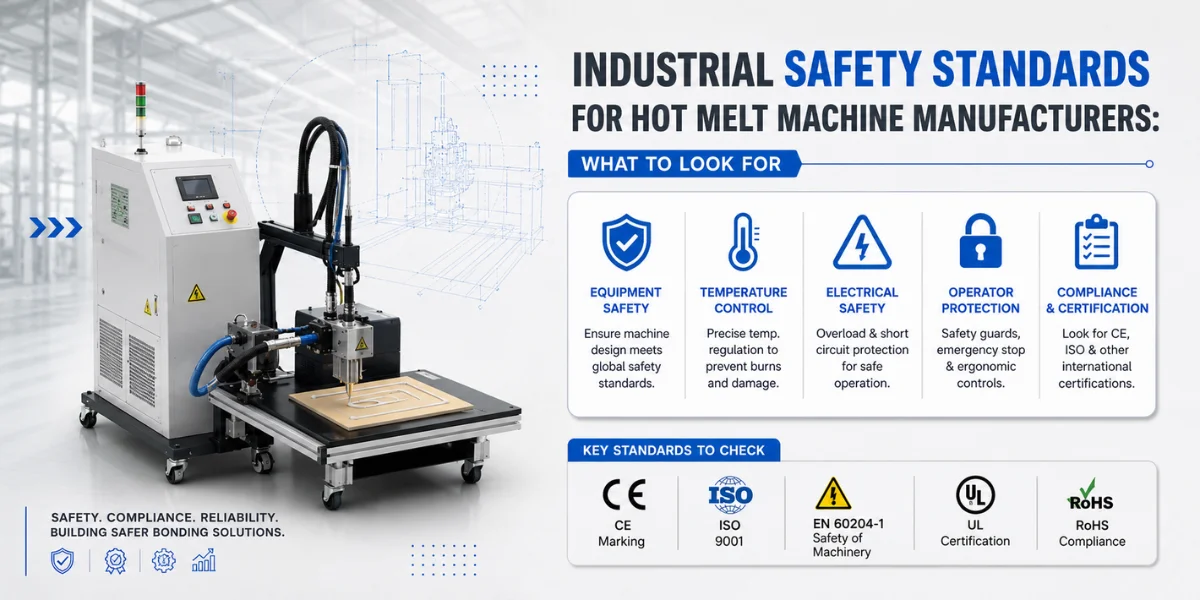
Certifications to Look For
When evaluating industrial hot melt machine manufacturers, ask whether their equipment complies with recognised certifications and regional regulations.
Depending on your market, common certifications may include:
1. CE marking for European markets
2. ISO quality management systems
3. UL-certified electrical components (where applicable)
4. RoHS compliance for electronic components
5. Industry-specific machinery safety requirements
These certifications indicate that the manufacturer follows recognised design and quality practices.
Benefits of Choosing a Safety-Compliant Manufacturer
Selecting a manufacturer that prioritises industrial safety standards offers several long-term advantages.
Improved Workplace Safety
Safety-focused machines reduce the likelihood of operator injuries caused by excessive heat, electrical faults, or adhesive leaks.
Better Production Reliability
Reliable equipment experiences fewer unexpected failures, helping maintain consistent production schedules.
Lower Maintenance Costs
Machines built with quality components typically require fewer repairs and have longer service lives.
Easier Regulatory Compliance
Using compliant equipment supports workplace safety programmes and simplifies inspections in regulated industries.
Enhanced Product Quality
Stable temperature and pressure control ensure consistent adhesive application and stronger bonds.
Safety-compliant manufacturers use high-quality components, rigorous testing, and recognised engineering practices, resulting in machines that operate reliably and require fewer unexpected repairs.
Yes. Purchasing equipment from a safety-compliant manufacturer lowers the risk of workplace accidents, equipment failures, regulatory issues, and production disruptions, helping protect both employees and business operations.
A high-performing machine should also meet recognised safety standards to ensure efficient production without compromising operator safety, equipment longevity, or regulatory compliance.
Yes. Although they may have a higher initial cost, safety-compliant machines often deliver a better return on investment through reduced downtime, lower maintenance costs, improved productivity, and longer service life.
In addition to pricing and technical specifications, manufacturers should evaluate the supplier’s safety certifications, product testing processes, after-sales support, spare parts availability, operator training, and commitment to industry safety standards.
Industries Where Safety Compliance Is Critical
Industrial safety standards are especially important in sectors where machines operate continuously or produce high-value products.
These industries include:
1. Packaging and converting
2. Automotive manufacturing
3. Furniture production
4. Electronics assembly
5. Textile and nonwoven manufacturing
6. Bookbinding
7. Medical product manufacturing
8. Hygiene product production
In these environments, equipment reliability and operator safety directly affect productivity and customer satisfaction.
Common Mistakes When Buying a Hot Melt Machine
Many buyers focus only on price and overlook safety considerations.
Avoid these common mistakes:
1. Choosing equipment without verified safety certifications
2. Ignoring maintenance requirements
3. Purchasing machines without emergency stop functions
4. Selecting equipment that lacks temperature protection
5. Overlooking after-sales technical support
6. Failing to verify spare parts availability
Considering these factors early helps prevent higher operating costs later.
Best Practices for Safe Hot Melt Machine Operation
Even the safest equipment requires proper operation.
Manufacturers should ensure operators:
1. Receive adequate training
2. Wear appropriate personal protective equipment (PPE)
3. Follow maintenance schedules
4. Inspect hoses and applicators regularly
5. Clean adhesive systems as recommended
6. Never bypass built-in safety features
7. Report unusual machine behaviour immediately
Combining quality equipment with good operating practices creates a safer workplace.
Operators should perform a visual inspection before each shift, checking hoses, applicators, electrical connections, adhesive levels, and safety controls to ensure the machine is operating safely.
Operators should wear heat-resistant gloves, safety glasses or face shields, protective clothing, and appropriate safety footwear to minimise the risk of burns and other workplace injuries.
If the machine displays unusual temperatures, adhesive leaks, warning alarms, or inconsistent dispensing, stop operation immediately, follow the manufacturer’s safety procedures, and have the equipment inspected before restarting.
Preventive maintenance helps identify worn components, prevents unexpected breakdowns, maintains consistent adhesive application, and ensures the machine continues to operate safely and efficiently.
Yes. Ongoing operator training keeps employees informed about safe operating procedures, emergency response, routine maintenance, and proper machine handling, reducing the likelihood of accidents and improving overall productivity.
Conclusion
Choosing the right industrial hot melt machine involves much more than comparing specifications or pricing. Safety should be one of the primary considerations when evaluating manufacturers. Machines designed to meet recognised industrial safety standards help protect operators, improve production reliability, reduce maintenance costs, and ensure consistent adhesive performance.
By looking for features such as accurate temperature control, pressure management, emergency stop systems, electrical protection, insulated components, and recognised certifications, manufacturers can invest confidently in equipment built for long-term performance.
Whether you operate a small production facility or a high-speed manufacturing line, selecting a trusted hot melt machine manufacturer that prioritises safety is a smart investment in productivity, compliance, and workplace well-being.
FAQ's
Essential features include digital temperature control, over-temperature protection, emergency stop buttons, pressure relief systems, insulated heating components, and electrical safety mechanisms.
Safety standards help ensure machines operate reliably, protect operators from hazards, reduce downtime, and support compliance with workplace safety regulations.
Request documentation from the manufacturer, including certifications, compliance declarations, technical specifications, and maintenance guidelines before purchasing.
Yes. Machines with advanced safety systems experience fewer breakdowns, maintain consistent adhesive performance, and reduce production interruptions.
While budget matters, investing in a safety-compliant machine often reduces long-term costs through fewer repairs, improved reliability, reduced downtime, and better operator protection.