Packaging box sealing machines are used to close and secure cartons, corrugated boxes, and other packaging formats with consistent adhesive application. Depending on production requirements, box sealing can be performed manually, semi-automatically, or through fully automated packaging lines.
For businesses handling medium- to high-volume production, automated box sealing can improve sealing consistency, reduce manual intervention, control adhesive usage, and increase packaging throughput. Hot melt adhesive systems are particularly useful where fast bonding, reliable adhesion, and repeatable application are required.
Mahisa Packaging Systems LLP develops adhesive dispensing and packaging automation solutions, including manual glue dispensing equipment, semi-automatic cartoning systems, and high-speed pasting solutions for industrial packaging applications.
What Is a Packaging Box Sealing Machine?
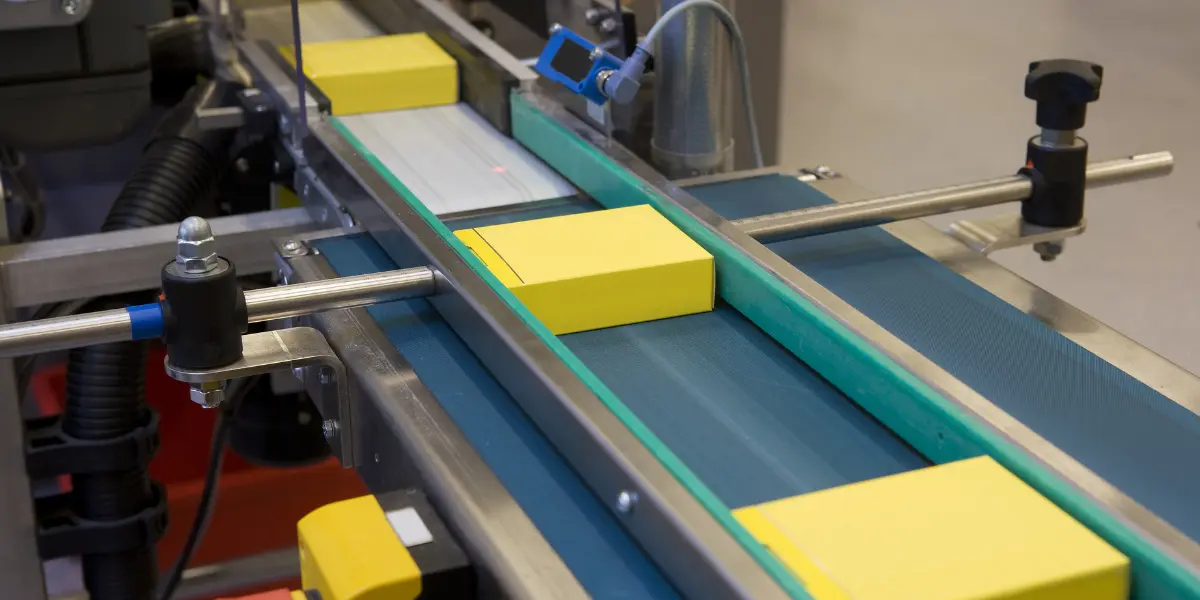
A packaging box sealing machine is equipment designed to close and secure the flaps or seams of a carton or box. Depending on the machine configuration, sealing can be achieved using hot melt adhesive, tape, or other suitable closure methods.
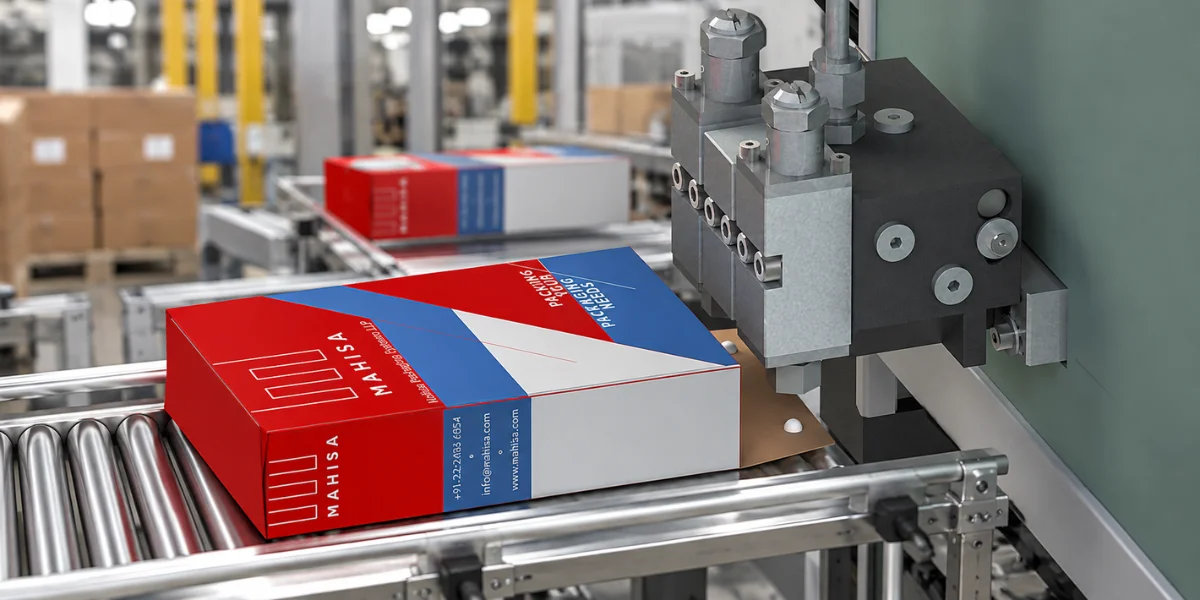
In hot melt applications, the machine heats adhesive to the required operating temperature and dispenses a controlled quantity onto a predetermined area of the box. The flaps are then brought together and compressed to form a secure bond.
A box sealing machine can be used as a standalone workstation or integrated into a larger packaging automation line.
What Does a Box Sealing Machine Do?
A box sealing machine typically performs one or more of the following functions:
- Positions or guides the box for sealing
- Applies adhesive accurately
- Controls adhesive quantity
- Brings box flaps together
- Applies pressure for proper bonding
- Maintains consistent sealing quality
- Reduces repetitive manual work
- Improves packaging line productivity
- Helps minimize adhesive and material wastage
The exact process depends on the machine type, box construction, adhesive, production speed, and degree of automation.
Why Is Box Sealing Important in Packaging?
Box sealing is more than simply closing a carton. The quality of the seal can affect product protection, transportation performance, warehouse handling, and the overall appearance of the finished package.
A properly sealed carton can help:
1. Protect Products During Transportation
A strong closure helps prevent the box from opening during handling, transportation, stacking, and delivery.
2. Improve Packaging Consistency
Manual sealing can vary from operator to operator. Automated adhesive dispensing provides a more repeatable application pattern.
3. Reduce Adhesive Waste
Controlled dispensing can apply adhesive only where it is required, helping avoid excessive glue consumption.
4. Increase Production Efficiency
Automation reduces repetitive manual operations and can support faster packaging cycles.
5. Improve Finished-Pack Appearance
Consistent glue application and properly aligned flaps create a cleaner and more professional package.
6. Support Packaging Automation
Box sealing equipment can be integrated with conveyors, cartoning systems, and other packaging equipment to create a more streamlined production process.
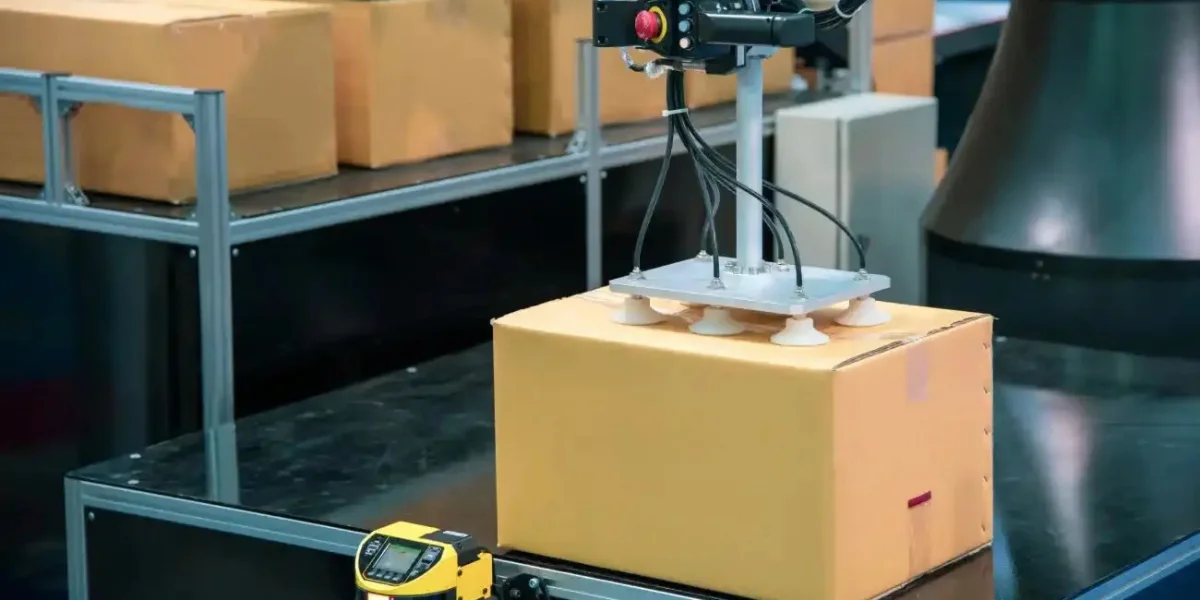
Types of Packaging Box Sealing Machines
There is no single sealing machine suitable for every packaging operation. The appropriate system depends on production volume, box dimensions, material, adhesive requirements, available workforce, and automation objectives.
1. Manual Glue Dispensing Machines
Manual systems are suitable for businesses that require controlled adhesive application but do not need complete automation.
The operator positions the box and applies adhesive using the dispensing equipment. These systems can be useful for smaller production volumes, customized packaging, sampling, product assembly, and operations where box sizes change frequently.
Suitable for:
- Small and medium production
- Customized cartons
- Short production runs
- Variable box sizes
- Businesses starting their automation journey
Mahisa’s EcoPlus Manual Glue Dispenser is designed as a manually operated hot melt adhesive dispensing solution for applications where controlled glue application is required.
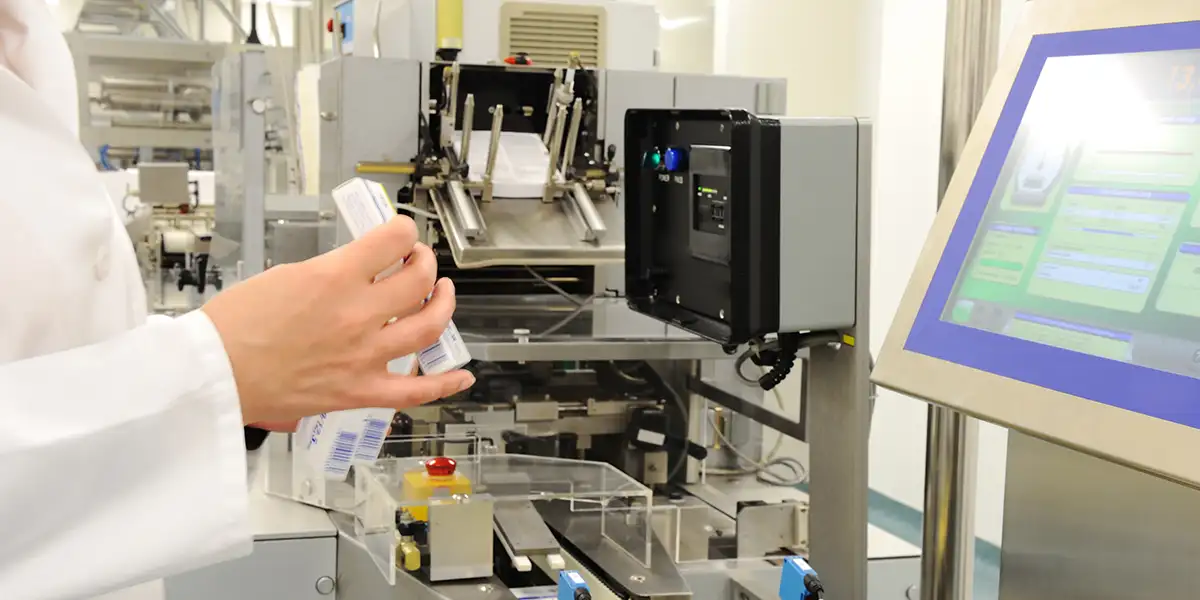
2. Semi-Automatic Box Gluing Machines
Semi-automatic systems reduce operator dependency while retaining flexibility in the packaging process.
The operator may load or position the box, while the machine performs controlled adhesive application and other defined sealing functions.
These machines are useful for businesses that have moved beyond manual operations but may not yet require a fully automated packaging line.
Suitable for:
- Medium-volume production
- Carton and corrugated packaging
- E-commerce packaging
- FMCG applications
- Pharmaceutical packaging
- Growing manufacturing operations
Mahisa’s EcoStar Box Gluing Machine is positioned as a semi-automatic solution for consistent and efficient box sealing applications.
3. Fully Automated Box Sealing and Pasting Machines
Fully automated systems are designed for high-volume production environments where speed, consistency, and reduced manual intervention are important.
These systems can be integrated into packaging lines and configured according to the required box format, adhesive application pattern, and production workflow.
Suitable for:
- Large-scale production
- High-volume carton sealing
- FMCG packaging
- Food and beverage packaging
- Industrial packaging
- High-throughput manufacturing
Mahisa’s SpeedPack Pasting Machine is designed for high-speed packaging operations and automated adhesive application.
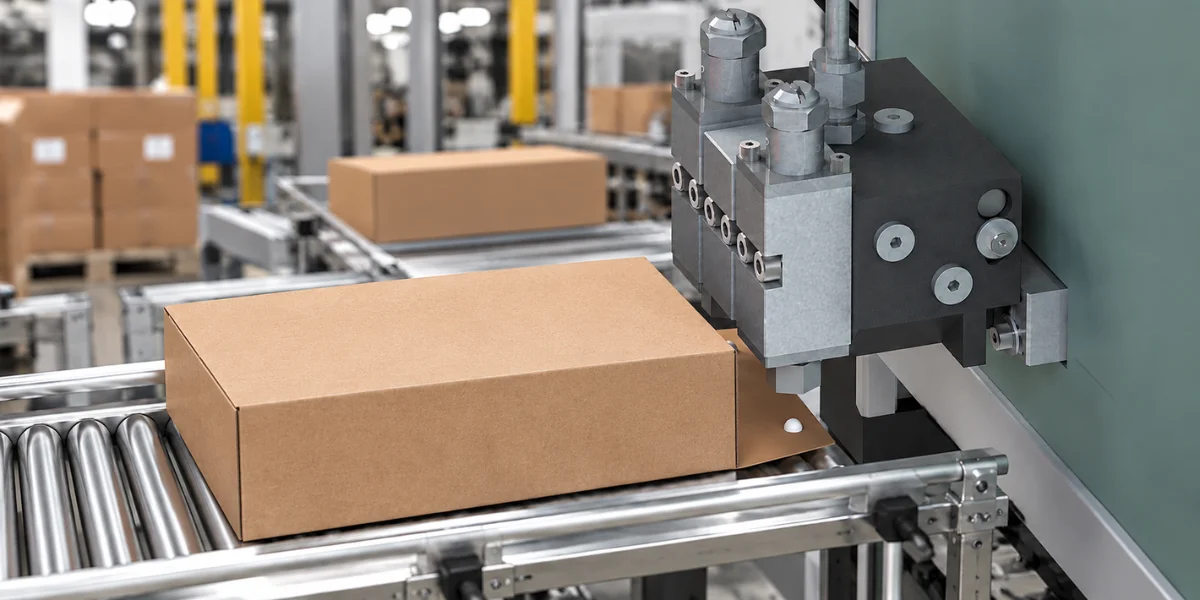
How Does a Packaging Box Sealing Machine Work?
The working principle depends on the machine configuration, but a typical hot melt box sealing process follows these stages.
Step 1: Box Preparation
The carton is formed and positioned correctly. The box flaps are aligned so the adhesive can be applied to the intended sealing area.
Step 2: Adhesive Heating
For hot melt systems, adhesive is heated to the required operating temperature. The adhesive must reach the appropriate viscosity for consistent dispensing.
Step 3: Adhesive Dispensing
The dispensing system applies a controlled amount of adhesive to the designated area.
Application may be in the form of:
- Dots
- Beads
- Lines
- Intermittent patterns
- Continuous patterns
The application pattern depends on the box design and bonding requirement.
Step 4: Flap Closing
Once adhesive is applied, the corresponding box flap is positioned over the adhesive-coated area.
Step 5: Compression
Pressure is applied to bring the surfaces into proper contact. This allows the adhesive to establish the required bond.
Step 6: Bond Formation
Hot melt adhesive sets rapidly after application, allowing the sealed carton to proceed to the next packaging stage.
Step 7: Inspection
The finished box can be checked for:
- Adhesive placement
- Bond strength
- Flap alignment
- Glue quantity
- Open edges
- Surface contamination
- Overall sealing quality
This controlled process is one reason automated adhesive dispensing is widely used in industrial packaging applications.
Hot Melt Adhesive in Box Sealing
Hot melt adhesive is commonly used for applications where rapid bonding and repeatable dispensing are required.
Unlike liquid adhesives that may require longer drying periods, hot melt adhesives can form a bond quickly after application and compression.
Key advantages include:
- Fast bonding
- Controlled dispensing
- Repeatable application
- Suitable for automated systems
- Reduced drying requirements
- Strong bonding for many carton materials
- Compatibility with different application patterns
However, adhesive selection should not be based only on speed. The box material, coating, surface characteristics, environmental conditions, application temperature, and required bond strength should also be considered.
Packaging Box Sealing Machine vs Manual Sealing
Businesses often move from manual sealing to machine-based sealing as production requirements increase.
| Factor | Manual Sealing | Machine-Based Sealing |
|---|---|---|
| Production speed | Lower | Higher |
| Glue application | Operator dependent | Controlled |
| Consistency | Can vary | More repeatable |
| Labour requirement | Higher | Lower |
| Adhesive control | Less precise | More controlled |
| High-volume production | Limited | More suitable |
| Automation | Minimal | Manual to fully automated |
| Integration | Limited | Can integrate with packaging lines |
The right choice depends on production volume rather than simply choosing the most automated machine available.
For a low-volume operation, a manual system may provide sufficient flexibility. For a high-volume production line, automation can provide greater consistency and throughput.
Where Are Packaging Box Sealing Machines Used?
Box sealing equipment is used across industries where cartons, corrugated boxes, and folding cartons need reliable closure.
Food and Beverage Packaging
Food manufacturers use carton sealing solutions for secondary packaging, transportation cartons, and product distribution.
FMCG Packaging
Consumer goods manufacturers often need consistent sealing across large production volumes.
Pharmaceutical Packaging
Pharmaceutical packaging requires controlled and reliable processes. Machine-based adhesive application can support consistent carton sealing where the packaging specification permits adhesive bonding.
E-Commerce and Logistics
E-commerce operations handle large numbers of shipments, making efficient and consistent carton closure important for order fulfilment and transportation.
Electronics Packaging
Electronic products often require secure secondary packaging to reduce the risk of product movement or carton opening during transportation.
Industrial Packaging
Industrial manufacturers may use heavy-duty cartons and specialized packaging formats that require reliable adhesive bonding.
Key Benefits of Using Packaging Box Sealing Machines
Consistent Adhesive Application
Machines can control the amount and location of adhesive, helping maintain consistent sealing quality.
Faster Packaging Operations
Automated systems can perform repetitive sealing operations more quickly than manual processes, depending on the machine and production configuration.
Lower Operator Dependency
Automation can reduce the amount of repetitive work performed manually, allowing operators to focus on machine supervision, quality checks, material loading, and other production activities.
Better Adhesive Utilization
Precise dispensing helps prevent excessive adhesive application and can contribute to better adhesive consumption.
Improved Box Integrity
A correctly applied adhesive pattern and proper compression can create a reliable bond that helps keep the carton securely closed.
Reduced Packaging Variability
Machine-controlled processes can reduce variations caused by differences in operator technique.
Easier Production Scaling
Businesses can select equipment based on their current production requirements and increase automation as production volumes grow.
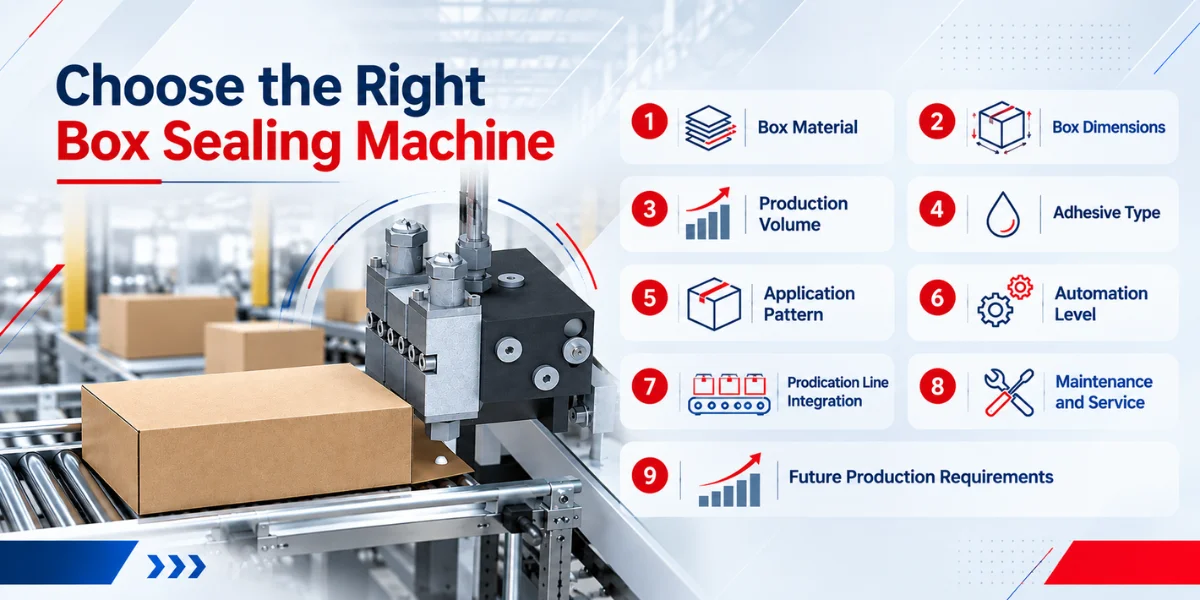
How to Choose the Right Box Sealing Machine
Selecting a machine should begin with the packaging application rather than the machine specification alone.
Consider the following factors:
1. Box Material
Identify whether you are sealing corrugated board, folding cartons, coated paperboard, or another substrate.
Different materials can have different adhesive compatibility requirements.
2. Box Dimensions
Measure the minimum and maximum box dimensions that the machine needs to accommodate.
3. Production Volume
Estimate the number of boxes you need to seal per hour or per shift.
Low-volume applications may need a manual solution, while high-volume operations may benefit from semi-automatic or fully automated equipment.
4. Adhesive Type
Consider whether the application requires hot melt, water-based adhesive, pressure-sensitive adhesive, or another adhesive technology.
5. Application Pattern
Determine whether the box needs dots, lines, continuous beads, or another adhesive pattern.
6. Automation Level
Decide how much manual intervention is acceptable.
The three broad levels are:
Manual → Semi-Automatic → Fully Automatic
7. Production Line Integration
If the machine needs to work with conveyors, cartoners, inspection systems, or other equipment, integration should be considered before purchasing.
8. Maintenance and Service
A machine is part of a production system, so technical support, maintenance, spare parts, training, and troubleshooting capabilities should also be evaluated.
9. Future Production Requirements
Avoid selecting equipment based only on today’s output. If production is expected to increase, consider whether the machine can accommodate future requirements.
Packaging Machine Manufacturing and Customization
Modern packaging applications are increasingly diverse. Box sizes, materials, production speeds, adhesive requirements, and automation levels can vary significantly from one manufacturer to another.
This makes machine configuration an important part of the purchasing process.
A packaging company should evaluate:
- Box specifications
- Required production speed
- Adhesive type
- Adhesive consumption
- Dispensing pattern
- Temperature requirements
- Machine footprint
- Operator requirements
- Integration requirements
- Maintenance needs
- Expected production growth
Customization may be required when standard machine configurations do not match the packaging format or production workflow.
Mahisa Packaging works across adhesive dispensing and packaging automation applications and provides solutions ranging from manual hot melt dispensers to semi-automatic cartoning systems and automated packaging equipment.
What Is the Difference Between a Box Sealing Machine and a Box Gluing Machine?
The terms are sometimes used interchangeably, but they can refer to different functions depending on the packaging setup.
A box sealing machine is a broader term for equipment used to close and secure a box.
A box gluing machine specifically uses adhesive to bond box flaps, seams, or other packaging surfaces.
A machine using hot melt adhesive can therefore function as a box sealing solution when its primary purpose is to close cartons using adhesive.
Other box closure systems may use:
- Adhesive
- Packaging tape
- Strapping
- Staples
- Other mechanical closure methods
The appropriate technology depends on the box design and packaging requirements.
Common Problems in Box Sealing
Even with automated equipment, incorrect machine settings or unsuitable materials can affect sealing performance.
Excessive Glue
Too much adhesive can increase consumption, create messy packaging, and potentially interfere with machine operation.
Insufficient Glue
Too little adhesive can result in weak bonding or premature box opening.
Incorrect Temperature
Hot melt systems need the adhesive to operate within the appropriate temperature range for consistent dispensing.
Poor Flap Alignment
If box flaps are not positioned correctly, even a well-controlled adhesive application may not produce the desired seal.
Inadequate Compression
The adhesive needs sufficient contact between the surfaces to form the intended bond.
Unsuitable Adhesive
An adhesive should be selected according to the substrate, application conditions, required bond strength, and machine specifications.
How to Improve Box Sealing Efficiency
Businesses can improve their sealing process by focusing on the complete packaging workflow rather than the sealing machine alone.
Standardize Box Specifications
Consistent box dimensions and materials make machine setup and operation easier.
Optimize Adhesive Application
Use the minimum adhesive quantity necessary to achieve the required bond.
Maintain Correct Machine Settings
Temperature, pressure, speed, and dispensing parameters should be checked regularly.
Train Operators
Even automated systems require trained operators for loading, setup, monitoring, cleaning, and basic troubleshooting.
Schedule Preventive Maintenance
Regular maintenance can help reduce unexpected downtime and maintain consistent machine performance.
Monitor Sealing Quality
Periodic inspection can identify adhesive, alignment, or mechanical issues before they affect a large production batch.
Choosing the Right Packaging Equipment for Your Business
The ideal sealing solution depends on three primary factors:
Production volume + Packaging specification + Required automation level
For smaller operations, a manual adhesive dispensing system may provide the flexibility required.
For growing operations, a semi-automatic box gluing solution can reduce repetitive work while maintaining operator involvement.
For high-volume manufacturing, automated pasting and carton sealing equipment can support faster and more consistent production.
Businesses looking for packaging equipment should also evaluate the manufacturer’s application expertise, technical support, customization capability, maintenance services, and experience with similar packaging requirements.
Mahisa Packaging has more than three decades of experience in hot melt adhesive dispensing and packaging automation, with solutions spanning manual, semi-automatic, and automated applications.
Why Choose Mahisa Packaging for Box Sealing Solutions?
Mahisa Packaging Systems LLP specializes in hot melt adhesive dispensing and packaging automation. Its product range includes hot melt glue dispensers, semi-automatic cartoning systems, automated solutions, and equipment for different adhesive application requirements.
The company’s solutions are designed for applications where businesses need improved adhesive control, packaging efficiency, repeatability, and automation.
Mahisa’s equipment portfolio includes:
- EcoPlus Manual Glue Dispenser
- EcoStar Box Gluing Machine
- SpeedPack Pasting Machine
- SmartPlot XY Plotter
- OneMelt Manual
- Hot melt adhesive dispensing systems
- Customized packaging automation solutions
The appropriate solution depends on production volume, box dimensions, adhesive requirements, application pattern, and desired automation level.
Conclusion
Packaging box sealing machines have become an important part of modern packaging automation because they can improve sealing consistency, adhesive control, productivity, and operational efficiency.
The right solution depends on the specific application. A manual dispenser may be sufficient for low-volume or customized packaging, while semi-automatic equipment can support growing production requirements. High-volume manufacturers may benefit from fully automated pasting and carton sealing systems integrated into their production lines.
Before selecting equipment, businesses should evaluate box material, dimensions, adhesive type, application pattern, production speed, automation level, maintenance requirements, and future capacity.
With the right combination of adhesive technology, machine configuration, and process control, businesses can create a more consistent and efficient box sealing operation.
Frequently Asked Questions
What is a packaging box sealing machine?
A packaging box sealing machine is equipment used to close and secure cartons or boxes. Depending on the system, it may use hot melt adhesive, tape, or another sealing method. Hot melt systems apply heated adhesive to selected areas of the carton and then compress the surfaces to create a secure bond.
How does a hot melt box sealing machine work?
A hot melt box sealing machine heats adhesive to the required operating temperature, dispenses a controlled amount onto the box, closes the relevant flaps, and applies pressure to establish the bond. The sealed carton can then move to the next stage of packaging, inspection, storage, or shipping.
What types of box sealing machines does Mahisa Packaging offer?
Mahisa Packaging offers different levels of adhesive dispensing and packaging automation, including the EcoPlus Manual Glue Dispenser, EcoStar Box Gluing Machine, and SpeedPack Pasting Machine. These solutions address different production requirements, from manual operations to higher-volume automated applications.
Is a glue machine for boxes suitable for high-volume production?
Yes, depending on the machine configuration and production requirements. Automated adhesive dispensing and pasting systems can support high-volume carton sealing by controlling glue application and reducing repetitive manual operations. The required machine should be selected according to box dimensions, adhesive, production speed, and packaging-line requirements.
How do I choose between manual, semi-automatic and automatic box sealing?
Choose based on production volume, operator availability, box variation, required speed, and future production plans. Manual systems are generally suitable for lower-volume or highly variable work, semi-automatic systems provide a balance between operator involvement and automation, while automatic systems are designed for higher-volume and integrated production environments.
What is the difference between a glue machine for boxes and a gluing machine for box applications?
Both terms generally refer to equipment that applies adhesive to cartons or boxes, although the exact machine configuration can vary. A machine may be designed for manual dispensing, semi-automatic box gluing, or fully automated adhesive application. The right system depends on the box format, adhesive, production volume, and required application pattern.