High volume glue machine technology helps manufacturers increase production output while maintaining consistent adhesive application in today’s competitive packaging industry. From corrugated boxes and folding cartons to paperboard packaging and industrial assembly, businesses need reliable adhesive application systems that can keep up with high-speed production demands.
A high volume glue machine helps improve productivity by automating adhesive application, reducing manual intervention, and maintaining consistent bonding across large production runs. When integrated into the right packaging line, it can help reduce production bottlenecks, minimise adhesive wastage, and improve overall operational efficiency.
For businesses looking to scale their packaging operations, investing in an automatic glue dispensing machine can be an important step towards achieving faster production cycles and dependable bonding results.
At Mahisa Packaging Systems LLP, adhesive application requirements are approached with a focus on production efficiency, application accuracy, and practical packaging line needs. Selecting the right Glue Dispensing Machine can help manufacturers build a more streamlined workflow that supports higher output without compromising the quality of finished packaging.
In this guide, we explore practical ways to increase production output using a high-volume adhesive application system, the features to evaluate, and how the right equipment can contribute to long-term manufacturing efficiency.
What Is a High Volume Glue Machine?
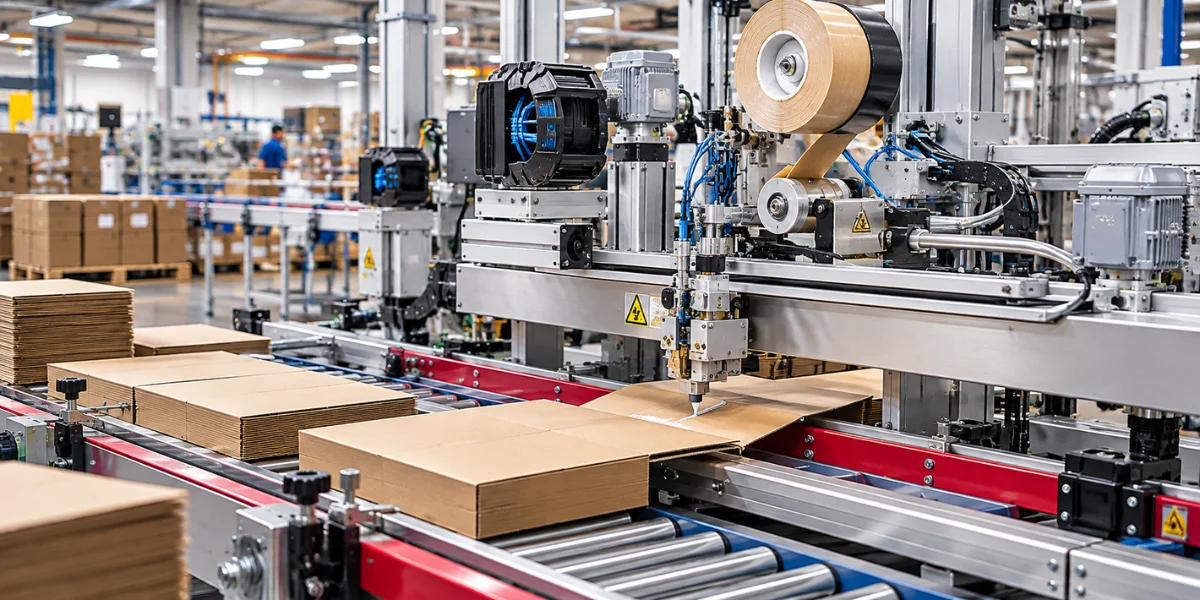
A high volume glue machine is an adhesive application system designed to support production environments where large quantities of products or packaging units need to be bonded efficiently. Depending on the configuration, it may apply hot melt adhesive or other compatible adhesives at controlled points, lines, or patterns during the manufacturing process.
These machines are commonly used in packaging operations involving corrugated cartons, folding cartons, paper products, labels, and other applications requiring repeatable adhesive placement.
Unlike manual glue application, an automated Glue Machine can deliver adhesive according to programmed settings and production requirements. This helps manufacturers maintain consistency across repeated operations while reducing dependence on manual application.
An automatic glue dispensing machine can also be integrated with compatible production equipment to coordinate adhesive delivery with the movement of products along the line.
For manufacturers, the main objective is not simply to dispense more adhesive. It is to achieve the correct bond, at the correct location, at the required production speed, with minimal interruptions and waste.
How Does a High Volume Glue Machine Increase Production Output?
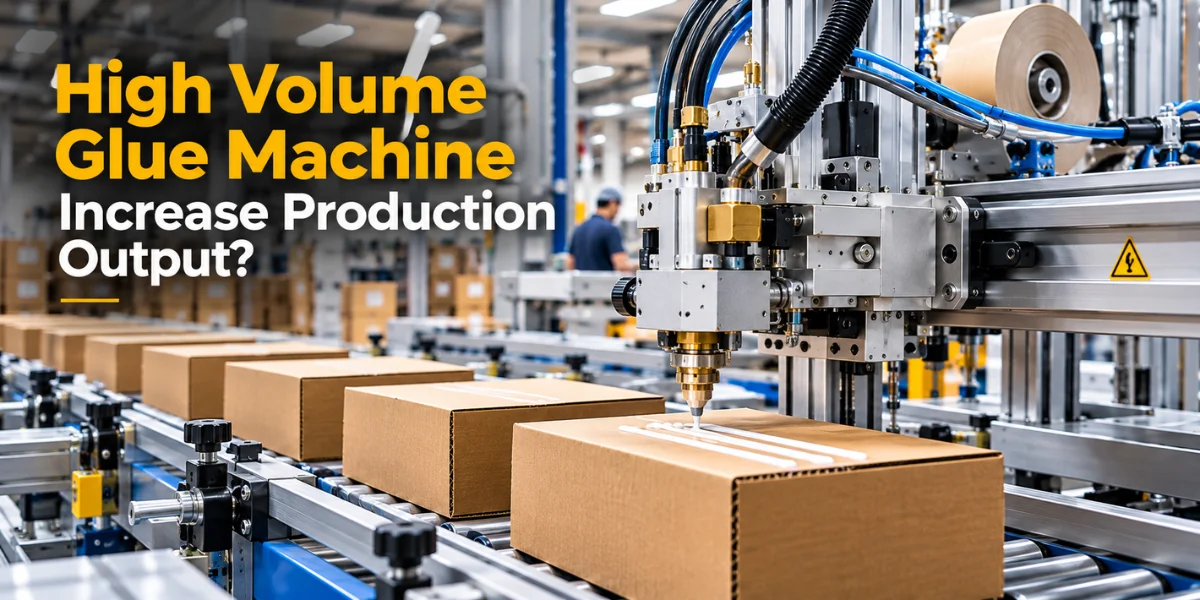
Increasing production output requires more than operating machinery at a higher speed. Manufacturers must balance application accuracy, adhesive performance, equipment reliability, and workflow efficiency. A properly selected high-volume system can improve output in several ways.
1. Automate Adhesive Application
Manual adhesive application can slow down packaging operations, especially when manufacturers process thousands of units per shift. It can also lead to variations in glue quantity, placement, and bonding quality.
An automatic glue dispensing machine helps streamline this process by delivering adhesive according to predefined settings. Once the system is correctly configured, operators can focus on monitoring production, checking product quality, and managing workflow rather than applying glue manually.
Automation can help manufacturers:
- Reduce repetitive manual tasks.
- Maintain consistent adhesive placement.
- Improve the speed of repetitive packaging operations.
- Reduce variations between production batches.
- Allocate labour more efficiently.
For packaging manufacturers handling high order volumes, automation can support a more predictable and scalable production process.
2. Reduce Production Cycle Time
Production cycle time refers to the time required to complete a manufacturing operation for a product or packaging unit. Excessive adhesive application time can become a bottleneck when other machines operate at higher speeds.
A high volume glue machine helps address this challenge by delivering adhesive in a controlled and repeatable manner. When its dispensing speed and application pattern are matched to the production line, manufacturers can reduce delays between successive units.
To improve cycle time, businesses should evaluate:
- Adhesive dispensing speed.
- Product movement and conveyor speed.
- Heating and adhesive preparation time, where applicable.
- Application pattern and number of glue points.
- Bonding or setting requirements.
- Coordination between the glue machine and downstream equipment.
Increasing the speed of a Glue Machine without considering the complete production process may simply transfer the bottleneck to another stage. The best results come from optimising the entire workflow.
3. Improve Adhesive Dispensing Accuracy
Using too much adhesive can increase material costs, create unwanted residue, and affect the appearance of finished packaging. Using too little adhesive may result in weak bonds, open carton flaps, or product rejection.
A well-configured Glue Dispensing Machine helps control adhesive quantity and placement, provided it is compatible with the adhesive and the required application.
Improved dispensing accuracy can contribute to:
- More consistent bonding strength.
- Reduced adhesive consumption.
- Fewer packaging defects.
- Less cleaning caused by excess glue.
- Better repeatability across production batches.
For high-volume packaging operations, even small improvements in adhesive usage per unit can create meaningful savings over time.
Manufacturers should regularly check nozzle condition, dispensing pressure or flow settings, temperature where relevant, and the quality of the finished bond. These checks help maintain reliable performance during extended production runs.
4. Minimise Production Downtime
Unplanned downtime is one of the most common obstacles to achieving higher manufacturing output. Equipment blockages, inconsistent adhesive flow, incorrect temperature settings, and delayed maintenance can interrupt production and reduce the number of finished units produced per shift.
A high volume glue machine should therefore be evaluated not only for its dispensing capacity but also for its reliability, ease of maintenance, and suitability for continuous operation.
Businesses can reduce avoidable downtime by following these practices:
- Inspect nozzles, hoses, filters, and other relevant components regularly.
- Follow the manufacturer’s cleaning and maintenance schedule.
- Use adhesives that meet the machine’s specifications.
- Maintain appropriate operating temperatures for the selected adhesive.
- Train operators to identify early signs of inconsistent dispensing.
- Keep suitable replacement parts available for critical components.
At Mahisa Packaging Systems LLP, businesses can evaluate their adhesive application requirements before selecting suitable equipment. Matching machine specifications to the production environment is an important step towards reducing interruptions and maintaining consistent output.
5. Synchronise Glue Dispensing with the Packaging Line
A high-speed packaging line requires coordination between product movement, adhesive dispensing, folding, compression, and other downstream processes.
If adhesive is dispensed too early, it may not form the required bond effectively. If it is dispensed too late, the packaging unit may miss the application point or require rework.
An automatic glue dispensing machine configured for the application can help coordinate dispensing with product position and machine movement, depending on its control system and integration capabilities.
To improve line synchronisation, manufacturers should examine:
- Conveyor speed and product spacing.
- Trigger timing for adhesive application.
- Glue pattern and dispensing duration.
- Compatibility with upstream and downstream machinery.
- Bonding time required before the next operation.
- Production line stoppages and restart procedures.
The objective is to make adhesive application a seamless part of the production process rather than an independent step that limits overall throughput.
6. Reduce Adhesive Waste and Operating Costs
Higher production output is most valuable when it does not lead to a disproportionate increase in operating expenses. Excess adhesive consumption, product rejections, frequent cleaning, and repeated machine adjustments can all raise the cost per finished unit.
A suitable Glue Machine helps manufacturers improve cost control when its dispensing settings, adhesive compatibility, and maintenance practices are properly managed.
Consider the following measures:
| Cost factor | Improvement strategy |
|---|---|
| Excess adhesive usage | Calibrate dispensing volume and application patterns. |
| Product rejection | Inspect bond quality and maintain consistent settings. |
| Frequent cleaning | Prevent leaks and follow recommended cleaning procedures. |
| Machine stoppages | Establish preventive maintenance routines. |
| Operator dependency | Standardise settings and provide operator training. |
| Material inconsistency | Verify adhesive quality and storage conditions. |
The most effective approach is to measure adhesive consumption, reject rates, and maintenance costs alongside production volume. These figures help determine whether a machine is improving overall manufacturing efficiency rather than simply increasing its operating speed.
FAQs: How Does a High Volume Glue Machine Increase Production Output?
1. How does a high volume glue machine improve production efficiency?
A high volume glue machine improves production efficiency by automating adhesive application, reducing manual handling, minimising downtime, and maintaining consistent bonding across large packaging runs.
2. Can an automatic glue dispensing machine reduce adhesive wastage?
Yes, an automatic glue dispensing machine can help reduce adhesive wastage by controlling glue quantity and application patterns. Proper calibration and regular maintenance further improve dispensing accuracy and cost efficiency.
3. Which factors affect the output of a Glue Dispensing Machine?
The output of a Glue Dispensing Machine depends on dispensing speed, adhesive compatibility, application accuracy, production line synchronisation, machine maintenance, and the type of packaging material being processed.
4. How can a Glue Machine reduce production downtime?
A Glue Machine can help minimise downtime when it is properly maintained and configured for the application. Regular cleaning, nozzle inspections, correct operating settings, and preventive maintenance help ensure consistent performance during production.
5. How can Mahisa Packaging Systems LLP help improve packaging output?
Mahisa Packaging Systems LLP can be approached to discuss adhesive application requirements for packaging operations. Sharing production targets, packaging materials, adhesive specifications, and automation needs can help determine a suitable glue dispensing solution for improving efficiency and output.
Key Features to Look for in a High Volume Glue Machine
Choosing the right machine is essential for achieving consistent performance. The required specifications will depend on the adhesive type, packaging material, production speed, and application pattern.
1. High and Consistent Dispensing Capacity
The machine should support the required production volume without compromising application accuracy. Manufacturers should evaluate its actual dispensing capacity under their intended operating conditions instead of relying solely on advertised maximum speeds.
2. Precise Flow and Application Control
Adjustable dispensing parameters help manufacturers apply the correct amount of adhesive to different products. Depending on the system, these controls may include flow rate, dispensing duration, pressure, temperature, and trigger timing.
3. Adhesive Compatibility
Not every machine supports every adhesive. Hot melt adhesives, water-based adhesives, and other formulations may require different equipment configurations and operating conditions.
Before purchasing a Glue Dispensing Machine, confirm that its specifications match the adhesive being used, including viscosity, operating temperature, and material compatibility.
4. Reliable Continuous Operation
For demanding production environments, equipment reliability is critical. Consider the machine’s duty cycle, component quality, ease of maintenance, and access to technical support.
5. Integration with Existing Machinery
A new automatic glue dispensing machine should fit the existing production workflow. Assess available space, electrical requirements, control interfaces, conveyor speeds, and compatibility with other packaging equipment.
6. Ease of Operation and Maintenance
Clear controls, accessible components, straightforward cleaning procedures, and appropriate operator training can help reduce setup errors and unnecessary downtime.
Mahisa Packaging Systems LLP can be considered when evaluating adhesive application solutions for packaging operations. Manufacturers should discuss their material types, output targets, adhesive requirements, and line configuration to identify a suitable machine specification.
How to Calculate Production Output from a Glue Machine
Before investing in a high-volume system, manufacturers should establish their current output and identify the gap between actual and target production.
A simple production calculation is:
Production Output = Units per Minute × Operating Minutes
For example, if a packaging line produces 60 units per minute and operates for 60 minutes, its theoretical output is 3,600 units per hour.
The actual output will usually be lower if the line experiences stoppages, product rejects, changeovers, or speed limitations.
This example demonstrates how output improvements can be measured after optimising adhesive dispensing, reducing stoppages, and improving line coordination. Actual results depend on the machine, product, adhesive, and production environment.
Manufacturers should also track good units produced per hour, rather than counting every processed unit, to ensure that higher output does not come at the expense of packaging quality.
Best Practices for Operating a High Volume Glue Machine Efficiently
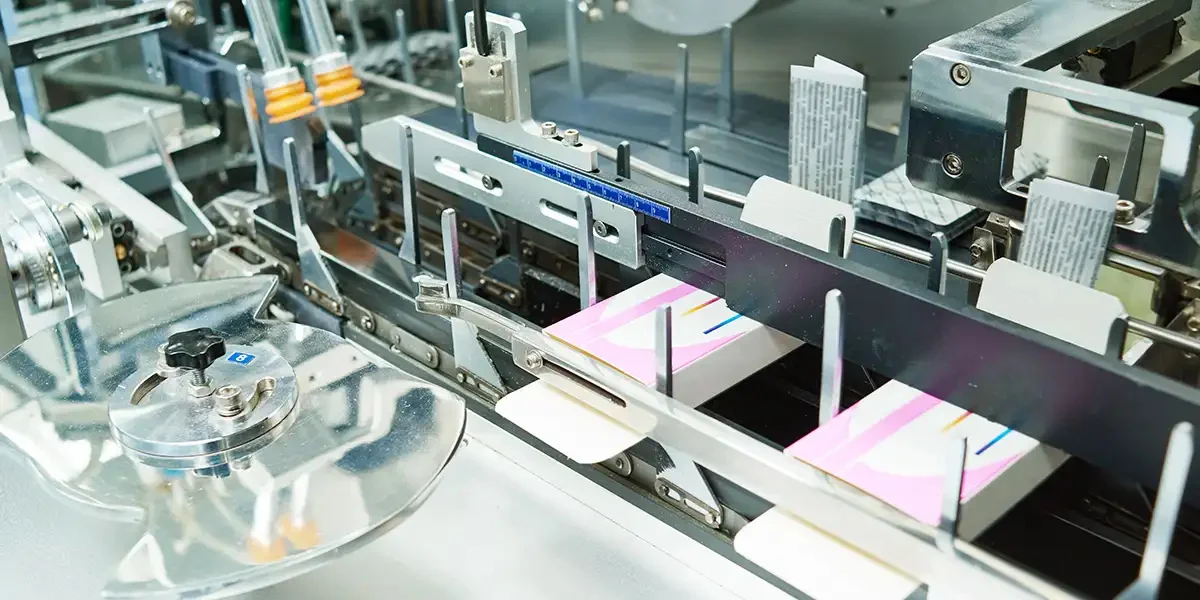
Even a high-performance machine requires the right operating practices to deliver its full potential. Manufacturers can improve output by standardising procedures and monitoring performance consistently.
1. Select the Right Adhesive for the Application
Adhesive selection directly affects bonding performance, dispensing consistency, and production speed. Factors such as viscosity, open time, setting time, substrate material, and environmental conditions should be considered before selecting an adhesive.
For example, a hot melt adhesive used for carton sealing must meet the requirements of the packaging material and the operating conditions of the machine.
2. Standardise Machine Settings
Document the recommended operating parameters for each product or packaging format. This reduces repeated trial-and-error adjustments during product changeovers and helps operators maintain consistent results.
Settings should be validated against actual bond quality and production requirements rather than copied across applications without testing.
3. Train Operators and Maintenance Staff
Operators should understand how to start, operate, clean, and safely shut down the equipment. They should also be able to recognise signs of inconsistent dispensing, leakage, abnormal heating, or component wear.
Proper training helps reduce avoidable errors and supports a more consistent production workflow.
4. Monitor Production Performance
Track production output, downtime, adhesive consumption, rejection rates, and maintenance frequency. Reviewing these figures regularly helps identify recurring bottlenecks and opportunities for improvement.
5. Schedule Preventive Maintenance
Follow the manufacturer’s maintenance recommendations, including inspections, cleaning, and replacement of worn components. Preventive maintenance is particularly important in high-volume environments where equipment interruptions can affect the entire production line.
Why Choose Mahisa Packaging Systems LLP for Glue Dispensing Solutions?
For packaging manufacturers, selecting adhesive application equipment is a production decision, not simply a machinery purchase. The right solution should support the packaging format, production volume, adhesive requirements, and long-term operating goals of the business.
Mahisa Packaging Systems LLP focuses on packaging-related adhesive application requirements, making it a relevant brand to approach when evaluating solutions for industrial bonding and packaging processes.
When discussing a high volume glue machine with Mahisa Packaging, manufacturers should consider the following factors:
- Production requirements: Define the current production rate and the target output per shift.
- Application requirements: Specify whether the machine will be used for carton sealing, corrugated packaging, folding cartons, or another compatible application.
- Adhesive compatibility: Confirm the adhesive type and its operating requirements.
- Automation needs: Determine whether the production line requires manual, semi-automatic, or automatic dispensing.
- Integration requirements: Assess how the machine will work with existing packaging equipment.
- After-sales support: Clarify installation, operator training, maintenance, and technical support arrangements.
A carefully selected Glue Dispensing Machine can help businesses improve adhesive application consistency, control material usage, and reduce process-related delays.
Mahisa Packaging Systems LLP can help prospective buyers evaluate their requirements and identify an appropriate solution based on the machine specifications and application needs. Contact the company to discuss your production goals and explore suitable adhesive application equipment.
Conclusion
Increasing output with a high volume glue machine requires a combination of suitable equipment, accurate adhesive dispensing, efficient production line integration, and preventive maintenance.
An automatic glue dispensing machine can help reduce manual intervention, improve application consistency, and support faster production cycles when correctly selected and configured. However, the best results come from measuring actual output, monitoring product quality, and addressing bottlenecks throughout the packaging process.
For manufacturers seeking to improve packaging productivity, Mahisa Packaging Systems LLP is a relevant brand to consider when evaluating adhesive application solutions. By aligning machine capabilities with production requirements, businesses can work towards higher throughput, reduced waste, and more reliable packaging operations.
Frequently Asked Questions (FAQs)
1. How can a high volume glue machine increase production output?
A high volume glue machine can increase production output by automating adhesive application, maintaining consistent glue placement, reducing manual handling, and minimising process-related delays. When properly integrated with the packaging line, it can help manufacturers process more units while maintaining the required bonding quality.
2. What is an automatic glue dispensing machine used for?
An automatic glue dispensing machine applies controlled quantities of adhesive to specified areas of a product or packaging material. Depending on its configuration, it can support applications such as carton sealing, corrugated packaging, folding cartons, and other industrial bonding processes.
3. How do I choose the right Glue Dispensing Machine for high-volume packaging?
Choose a Glue Dispensing Machine based on your production speed, adhesive type, packaging material, dispensing accuracy, automation requirements, and compatibility with existing equipment. You should also evaluate maintenance needs, operating costs, and available technical support before making a purchase.
4. How can Mahisa Packaging Systems LLP help businesses improve glue application efficiency?
Mahisa Packaging Systems LLP is a brand to consider when evaluating packaging-related adhesive application solutions. Businesses should share their production targets, packaging materials, adhesive specifications, and automation requirements with the company to determine which equipment options are suitable for their application.
5. How can I reduce adhesive wastage while increasing production speed?
Manufacturers can reduce adhesive wastage by calibrating dispensing settings, maintaining nozzles and other components, using compatible adhesives, and monitoring bonding quality. Regular maintenance and consistent operating procedures help prevent excess application, leakage, and defects that may reduce overall production efficiency.