Corrugated cardboard glue is an adhesive used to bond the layers, seams, flaps, and surfaces of corrugated packaging. The right adhesive helps improve box strength, dimensional stability, production speed, and resistance to handling and transportation conditions.
For manufacturers, choosing the correct adhesive depends on the type of corrugated board, box construction, production speed, application method, and required bond strength. Adhesives can be applied manually for smaller operations or through dispensing and gluing equipment for more consistent production.
What Is Corrugated Cardboard Glue?
Corrugated cardboard glue is an adhesive formulated to create a reliable bond between paperboard or corrugated cardboard surfaces. It can be used during corrugated board production, carton conversion, box assembly, flap sealing, and packaging operations.
The adhesive must provide sufficient bonding strength while matching the characteristics of the board and production process. Factors such as viscosity, setting time, temperature, moisture resistance, and application method can affect the final bond.
For high-volume packaging operations, controlled adhesive dispensing can improve consistency by applying a repeatable amount of glue at the required location.
Why Is Glue Important in Corrugated Box Manufacturing?
Glue plays an important role in maintaining the structural integrity of corrugated packaging.
A properly selected adhesive can help:
- Create strong bonds between cardboard surfaces
- Secure box flaps and side seams
- Reduce the risk of carton opening during transportation
- Improve production consistency
- Reduce excessive adhesive usage
- Support faster packaging operations
- Maintain box strength during storage and handling
- Improve the overall appearance of finished cartons
The adhesive should be selected according to the application rather than simply choosing the strongest available glue.
How Does Glue Bond Corrugated Cardboard?
The bonding process depends on the adhesive technology being used.
In a typical application, adhesive is applied to a predetermined area of the cardboard surface. The mating surfaces are then brought together under suitable pressure or contact conditions. The adhesive develops sufficient bond strength as it sets, cools, dries, or undergoes another curing mechanism.
For hot melt adhesives, the material is heated until it reaches its working temperature. It is then dispensed onto the required surface. When the adhesive cools, it solidifies and forms the bond.
For water-based adhesives, bonding occurs primarily as water leaves the adhesive layer and the adhesive film develops its required strength.
The correct application temperature, adhesive quantity, substrate condition, and machine settings all contribute to consistent bonding.
Types of Adhesives Used for Corrugated Cardboard
Different packaging applications require different adhesive technologies. The most commonly used options include:
1. Starch-Based Adhesives
Starch-based adhesives are widely associated with corrugated board manufacturing, particularly for bonding the liner and fluted medium.
Key characteristics:
- Cost-effective
- Suitable for large-scale corrugation
- Water-based formulation
- Commonly used for paper-to-paper bonding
- Suitable for many standard corrugated board applications
Their performance can be affected by moisture, formulation, board characteristics, and production conditions.
2. Hot Melt Adhesives
Hot melt adhesives are thermoplastic adhesives that are heated before application and form a bond as they cool.
They are commonly considered when fast setting and controlled adhesive application are important.
Advantages include:
- Fast setting
- Strong initial bond
- Suitable for automated dispensing
- Consistent application when correctly controlled
- Useful for carton sealing and assembly
- Suitable for high-speed packaging applications
Hot melt systems are particularly useful when manufacturers need controlled glue application rather than manual application.
3. Water-Based Adhesives
Water-based adhesives, including PVA-based formulations, are used in several paperboard and carton applications.
They can be suitable for:
- Carton side seams
- Flap bonding
- Paperboard packaging
- General paper-to-paper applications
The selection should consider drying time, substrate absorbency, production speed, and environmental conditions.
4. Pressure-Sensitive Adhesives
Pressure-sensitive adhesives remain tacky and bond when pressure is applied.
They can be used in applications where:
- Easy opening is required
- Resealing is useful
- Self-adhesive features are required
- Specialized packaging formats are involved
5. Specialty Adhesives
Some packaging applications require adhesives with specific properties such as improved moisture resistance, temperature resistance, flexibility, or compatibility with coated surfaces.
The adhesive should therefore be evaluated based on the complete packaging process rather than the cardboard material alone.
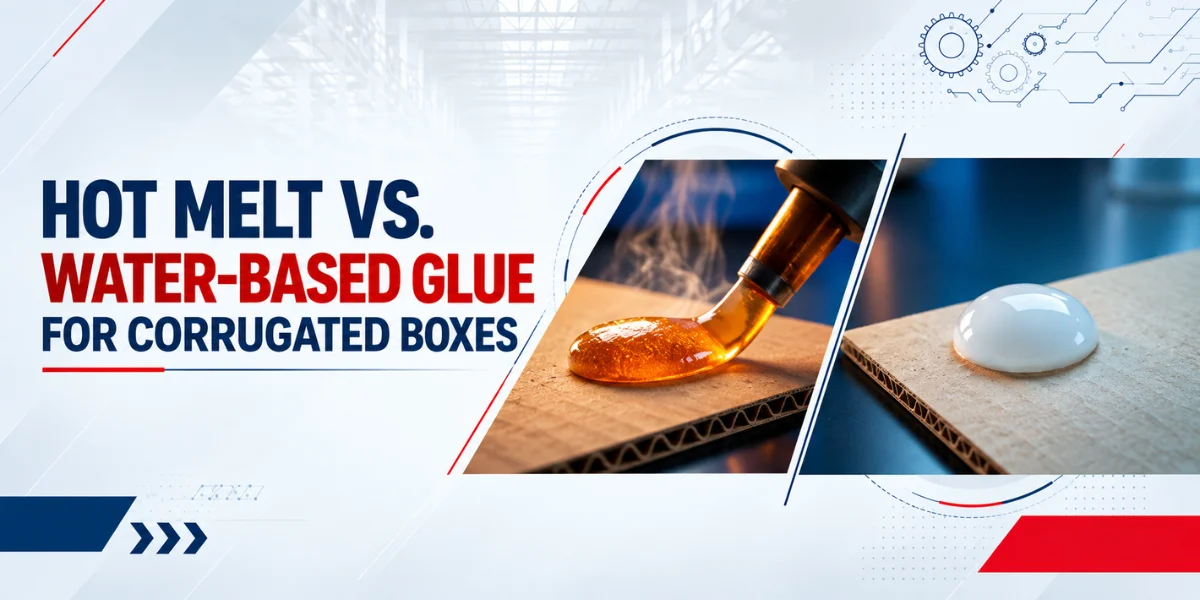
Hot Melt vs. Water-Based Glue for Corrugated Boxes
The choice between hot melt and water-based adhesive depends on production requirements.
| Factor | Hot Melt Adhesive | Water-Based Adhesive |
|---|---|---|
| Setting | Generally fast | Depends on drying conditions |
| Application | Heated and dispensed | Usually applied in liquid form |
| Production speed | Suitable for fast processes | Suitable for many conventional processes |
| Equipment | Requires heated dispensing equipment | Requires compatible liquid adhesive equipment |
| Bond development | Rapid after cooling | Develops as water evaporates |
| Application control | Highly controllable with dispensing systems | Depends on application equipment |
| Typical uses | Carton sealing, assembly, automated packaging | Paperboard, carton seams and general bonding |
The appropriate option depends on the substrate, adhesive formulation, machine configuration, production volume, and required cycle time.
What Factors Affect Corrugated Cardboard Glue Performance?
Several factors can influence the quality of a cardboard adhesive bond.
1. Adhesive Viscosity
Viscosity affects how easily the adhesive flows and how consistently it can be applied. An adhesive that is too thick or too thin for the equipment may create inconsistent application.
2. Application Temperature
For hot melt adhesives, maintaining the recommended operating temperature is important. Incorrect temperatures can affect adhesive flow, bonding performance, and equipment operation.
3. Glue Quantity
Too little adhesive can result in weak bonding, while excessive adhesive can increase consumption, create mess, and affect production efficiency.
4. Cardboard Surface
Dust, coatings, moisture, surface treatment, and substrate porosity can influence adhesion.
5. Setting or Drying Time
The adhesive must develop sufficient strength within the production cycle. Faster production lines generally require an adhesive system that can keep pace with the required cycle time.
6. Environmental Conditions
Humidity and temperature can affect both the cardboard and adhesive. Applications involving warehouses, cold storage, transportation, or humid environments may require specific adhesive characteristics.
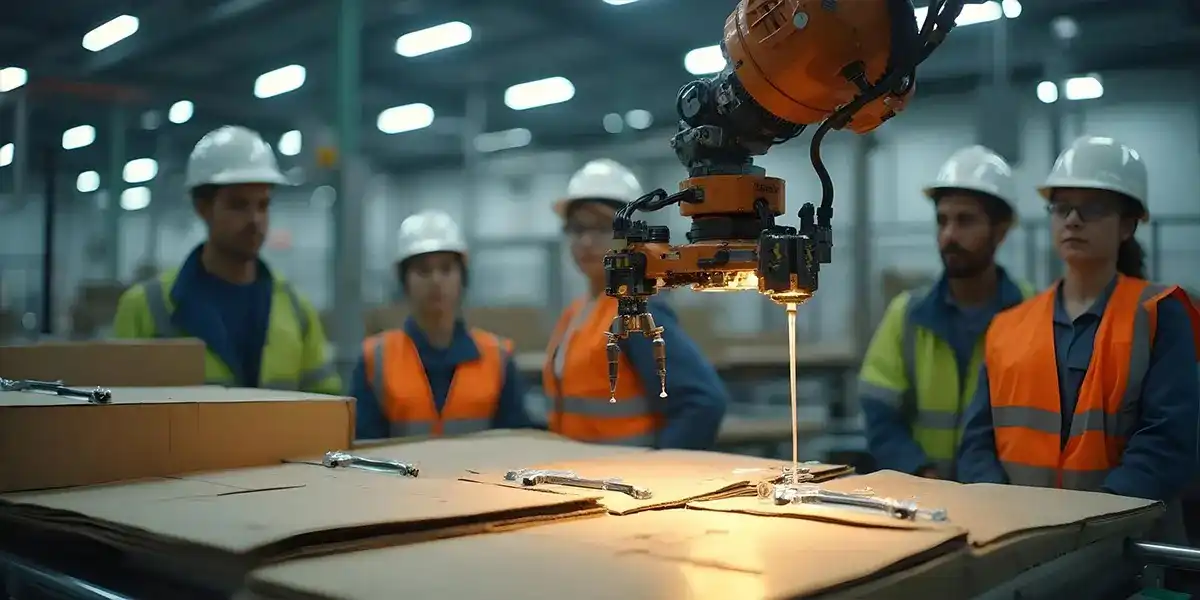
How Is Glue Applied to Corrugated Boxes?
Glue can be applied using several methods depending on production volume and packaging requirements.
Manual Application
Manual application may be appropriate for low-volume production, prototyping, repairs, or applications where box quantities are limited.
However, manual application can result in variations in glue quantity, placement, and production speed.
Manual Dispensing Systems
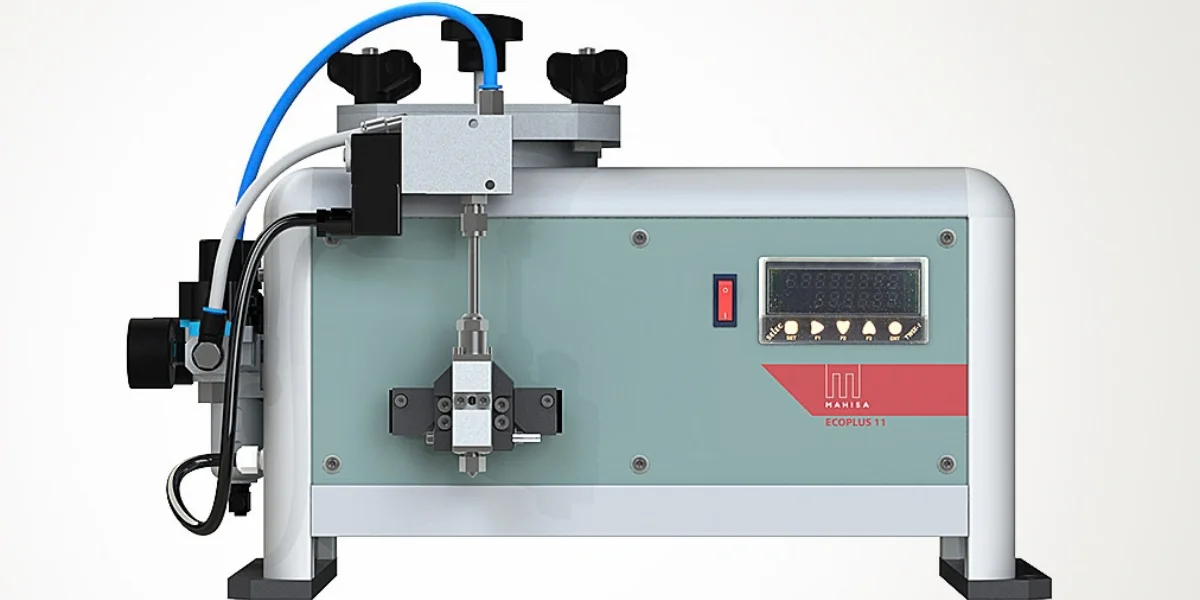
Manual hot melt dispensing systems provide greater control than conventional hand-applied methods. The operator can activate the adhesive system using a switch, foot pedal, or similar control.
Mahisa’s EcoPlus and EcoStar systems are designed for manual and low-to-medium volume adhesive dispensing applications. EcoPlus is positioned for applications requiring controlled manual glue dispensing, while EcoStar provides a turnkey hot melt dispensing solution for compact production lines.
Semi-Automatic and Automatic Gluing
Higher production volumes can benefit from automated adhesive application. Automated systems can control glue patterns, application points, and production cycles.
Mahisa’s SpeedPack Pasting Machine, for example, is designed for continuous carton pasting and can produce up to 60 cartons per minute, depending on the application and configuration.
How to Choose the Right Corrugated Cardboard Glue
Consider these factors before selecting an adhesive:
1. Type of cardboard:
Identify whether the application uses single-wall, double-wall, coated, printed, or specialty board.
2. Box design:
Side seams, bottom flaps, top flaps, and specialty constructions may require different adhesive application patterns.
3. Production volume:
Low-volume production may require a manual dispensing system, while higher volumes can benefit from automated equipment.
4. Required setting time:
Choose an adhesive that develops sufficient bond strength within your production cycle.
5. Environmental conditions:
Consider humidity, temperature, storage conditions, and transportation requirements.
6. Application equipment:
The adhesive should be compatible with the melter, hose, applicator, nozzle, and dispensing system.
7. Glue consumption:
Controlled dispensing can help reduce unnecessary adhesive usage and improve process consistency.
8. Substrate compatibility:
Always test the adhesive against the actual cardboard, coatings, inks, and other materials used in production.
Benefits of Using a Controlled Glue Dispensing System
A controlled dispensing system can provide several advantages over inconsistent manual application.
Consistent Glue Application
A dispensing system can deliver a controlled quantity of adhesive at defined application points.
Reduced Adhesive Waste
Accurate application can help avoid excessive glue usage, which can reduce material waste and operating costs.
Improved Production Efficiency
Controlled dispensing can make repetitive packaging operations faster and more consistent.
Better Bond Quality
Consistent adhesive placement helps reduce weak spots caused by uneven manual application.
Easier Process Standardization
Machine-based adhesive application can help manufacturers establish repeatable production parameters.
Choosing a Gluing Machine for Corrugated Packaging
The equipment should match the production requirement rather than simply the size of the box.
For smaller production volumes, a manual hot melt dispensing system may provide a practical starting point. For higher production requirements, automated or semi-automatic equipment can provide greater throughput and process control.
Mahisa Packaging Systems LLP provides hot melt adhesive dispensing and packaging automation solutions for applications including corrugated cartons, carton sealing, paperboard products, rigid boxes, and other packaging applications. Its product range includes EcoPlus, EcoStar, SpeedPack, SmartPlot, OneMelt, and Felix Gluer systems.
When evaluating a glue machine for boxes, consider:
- Production volume
- Box dimensions
- Adhesive type
- Required glue pattern
- Application speed
- Manual or automatic operation
- Available floor space
- Maintenance requirements
- Operator skill level
- Future production requirements
Common Applications of Corrugated Cardboard Glue
Corrugated cardboard adhesives are used across several industries, including:
- E-commerce packaging
- FMCG packaging
- Food and beverage packaging
- Pharmaceutical packaging
- Electronics packaging
- Retail packaging
- Industrial packaging
- Agricultural packaging
- Logistics and shipping cartons
- Promotional and display packaging
Each application can have different requirements for bond strength, setting speed, moisture resistance, and adhesive compatibility.
How Mahisa Packaging Supports Corrugated Box Gluing
Mahisa Packaging Systems LLP specializes in hot melt adhesive dispensing and packaging automation solutions. Its equipment portfolio includes manual dispensing systems, box gluing equipment, pasting machines, and precision glue plotters designed for different production requirements.
For businesses moving from manual adhesive application to controlled dispensing, solutions such as EcoPlus and EcoStar can provide a practical transition. For continuous carton pasting requirements, SpeedPack offers a higher-throughput approach.
The right system depends on the adhesive, box design, production volume, and desired level of automation.
Conclusion
Corrugated cardboard glue is an important part of reliable box manufacturing and packaging. The right adhesive must work effectively with the cardboard, box design, production speed, environmental conditions, and application equipment.
For manufacturers handling growing packaging volumes, controlled adhesive dispensing can improve consistency, reduce unnecessary glue consumption, and support more efficient production. From manual hot melt dispensing to automated carton pasting, the appropriate solution depends on the specific production requirement.
By combining the right adhesive with suitable dispensing equipment, manufacturers can create stronger, more consistent, and more reliable corrugated packaging while improving the efficiency of their production process.
Frequently Asked Questions
What is the best glue for corrugated cardboard?
The best adhesive depends on the application. Starch-based adhesives are widely used in corrugated board manufacturing, while hot melt and water-based adhesives are commonly used for carton assembly, seams, and flap bonding. The choice should consider board type, production speed, moisture conditions, and required bond strength.
Can hot melt glue be used on corrugated cardboard?
Yes. Hot melt adhesive can be used for several corrugated packaging applications, including carton assembly, flap sealing, and box construction. It is particularly useful where rapid setting and controlled dispensing are required.
How do I prevent corrugated boxes from opening after gluing?
Use an adhesive compatible with the cardboard and application, apply the correct quantity, maintain suitable application conditions, and ensure adequate contact between the bonded surfaces. Testing the complete packaging process before full-scale production is recommended.
What does Mahisa Packaging offer for corrugated box gluing?
Mahisa Packaging offers hot melt adhesive dispensing and packaging automation solutions for different production requirements. Its range includes manual dispensing systems such as EcoPlus and EcoStar, as well as automated and semi-automatic solutions such as SpeedPack and precision glue dispensing systems.
Which Mahisa Packaging machine is suitable for low-volume box gluing?
For low- to medium-volume operations, Mahisa Packaging’s EcoPlus and EcoStar systems are designed to provide controlled hot melt adhesive dispensing without requiring a fully automated packaging line. The appropriate model depends on production volume, adhesive requirements, and the application.
When should a manufacturer move from manual gluing to a machine?
Manufacturers should consider a machine when manual application becomes inconsistent, adhesive consumption increases, production volumes grow, or operators cannot maintain the required application speed and accuracy. A dispensing or automated system can help standardize adhesive application and improve production efficiency.