Hot Melt Adhesive Usage in Packaging has become an important part of modern packaging operations, where manufacturers require fast bonding, reliable seals, clean application, and consistent results across different materials. Hot melt adhesive systems support these requirements by enabling quick application and forming a strong bond as the adhesive cools, making them suitable for a wide range of packaging processes.
From corrugated boxes and folding cartons to labels, flexible packaging, and e-commerce mailers, adhesive systems support both manual and automated packaging operations. The right adhesive formulation and dispensing equipment can also improve production speed, reduce adhesive waste, and maintain consistent packaging quality.
What Is Hot Melt Adhesive?
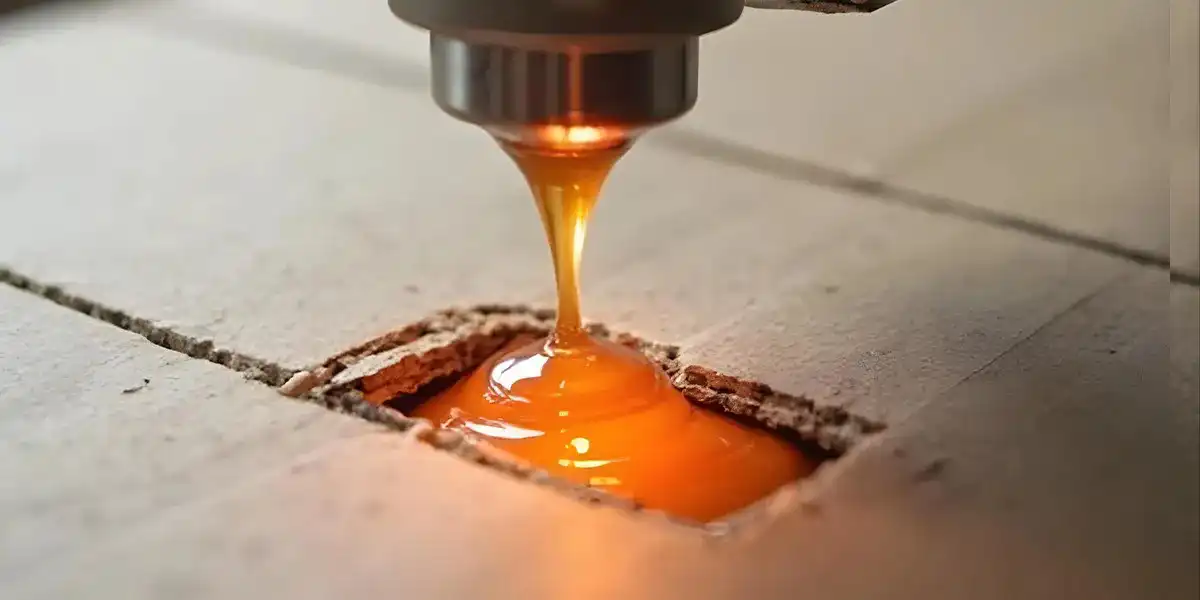
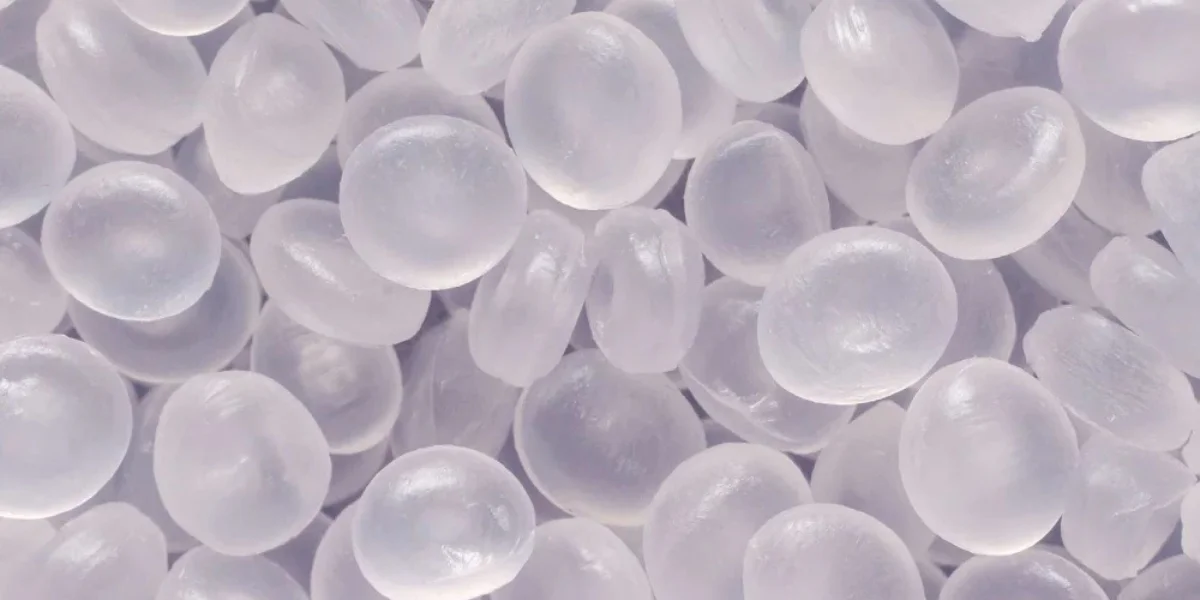
Hot melt adhesive is a thermoplastic bonding material that is solid at room temperature. It is heated until it becomes molten, applied to the required surface, and then allowed to cool and solidify to create a bond.
Unlike water-based adhesives, the process does not depend on evaporation of water or solvent to form the initial bond. This makes hot melt systems particularly suitable for packaging operations where quick setting and high production speeds are important.
The performance of a hot melt system depends on factors such as:
- Substrate or packaging material
- Application temperature
- Adhesive viscosity
- Open time
- Setting speed
- Required bond strength
- Temperature and moisture conditions
- Application method and dispensing equipment
Why Is Hot Melt Adhesive Used in Packaging?
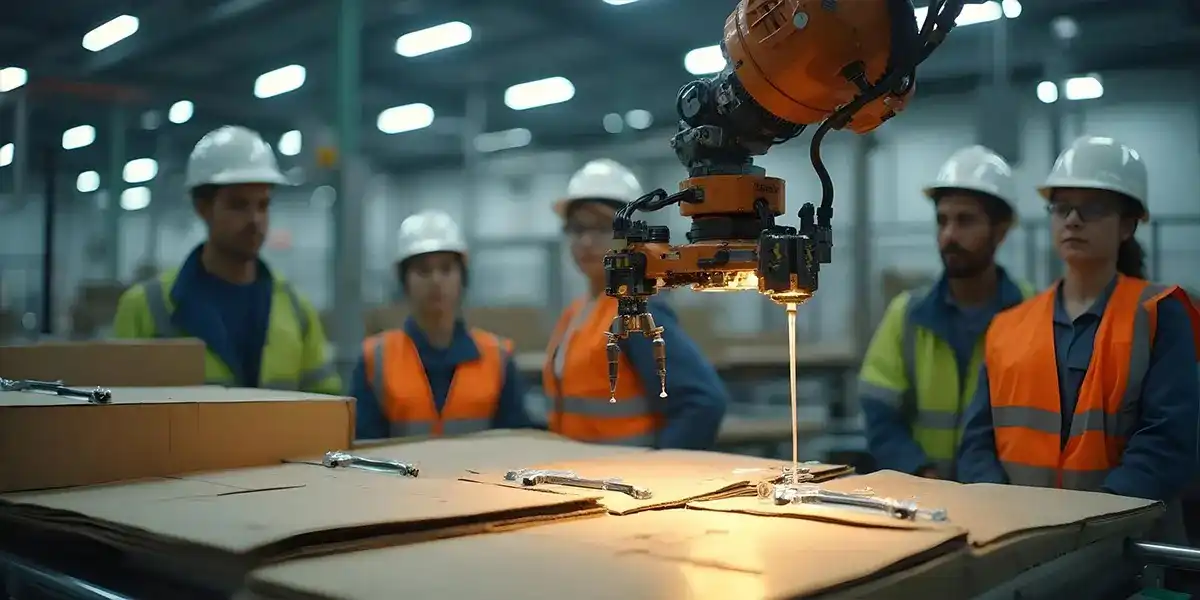
The primary reason manufacturers use hot melt adhesive for bonding is its combination of speed, versatility, and reliable adhesion.
In packaging production, cartons and boxes often need to be formed, sealed, or closed within seconds. A fast-setting adhesive allows the next production stage to begin sooner, making it suitable for high-speed manufacturing environments.
Hot melt systems can also be used with materials such as:
- Corrugated board
- Kraft paper
- Paperboard
- Folding cartons
- Plastic films
- Foils
- Laminated materials
- Selected rigid plastics
The exact adhesive formulation should always be matched to the substrate and application conditions.
Major Applications of Hot Melt Adhesives in Packaging
1. Corrugated Box Sealing
Corrugated boxes are widely used for shipping, e-commerce, logistics, FMCG, and industrial products. Adhesive dispensing systems can apply controlled glue patterns to flaps before the box is compressed and sealed.
A suitable formulation provides sufficient bond strength while allowing packaging lines to operate at high speeds.
2. Carton and Case Sealing
Folding cartons and cases are commonly used for food, beverages, pharmaceuticals, cosmetics, and consumer products.
Hot melt application equipment can provide accurate glue placement on carton flaps, helping manufacturers achieve consistent closures and reduce manual intervention.
3. Flexible Packaging
Flexible packaging may include films, laminates, pouches, wraps, and other lightweight formats. Adhesive selection becomes particularly important because different films and laminates can have very different surface characteristics.
The adhesive must be compatible with the substrates while providing the required flexibility, bond strength, and resistance for the intended application.
4. Labeling and Wrap-Around Applications
Adhesive systems are also used for labels and wrap-around packaging applications. Bottles, containers, cartons, and other packages may require controlled adhesive placement to maintain label positioning during storage and transportation.
For these applications, factors such as tack, setting speed, surface compatibility, and moisture resistance need to be considered.
5. Paperboard and Folding Cartons
Paperboard packaging requires accurate bonding to maintain the shape and structural integrity of the finished carton.
Applications include:
- Cosmetic cartons
- Pharmaceutical packaging
- Retail boxes
- Food cartons
- Premium product packaging
- Folding boxes
Precise dispensing helps avoid excessive adhesive, visible glue marks, and inconsistent carton assembly.
6. E-Commerce and Mailer Packaging
The growth of e-commerce has increased the need for secure and efficient shipping packaging. Corrugated cartons, mailers, and shipping boxes require closures that can withstand handling, stacking, and transportation.
Fast-setting adhesive application can support high-volume packing operations while maintaining consistent seals.
7. Food and Beverage Packaging
Food and beverage packaging requires careful adhesive selection based on the packaging structure, application, storage conditions, and applicable regulatory requirements.
Applications may include:
- Carton forming
- Secondary packaging
- Multipack assembly
- Case sealing
- Label application
For food-related applications, manufacturers should verify that the selected adhesive is appropriate for the specific packaging construction and intended food-contact conditions.
8. Pharmaceutical and Medical Packaging
Pharmaceutical and medical packaging places strong emphasis on package integrity, reliable closure, cleanliness, and controlled manufacturing.
Adhesive dispensing equipment can help achieve repeatable glue patterns and consistent production quality for suitable packaging formats.
Can Hot Melt Adhesive Be Used on Plastic?
Yes, suitable formulations can be used for bonding selected plastic substrates. However, hot melt adhesive for plastic should not be treated as a universal solution because different plastics have different surface properties.
Materials such as PP, PE, ABS, PET, and other plastics may require different adhesive formulations, surface preparation, application temperatures, or bonding conditions.
Before selecting an adhesive, manufacturers should evaluate:
- Plastic type
- Surface energy
- Surface cleanliness
- Required bond strength
- Operating temperature
- Flexibility requirements
- Exposure to moisture or chemicals
- Production speed
The adhesive and dispensing system should be tested with the actual substrate and production conditions before full-scale implementation.
Key Benefits of Hot Melt Adhesive in Packaging
Fast Setting
The adhesive solidifies as it cools, allowing packaging operations to move quickly from application to handling.
High Production Efficiency
Fast application and setting can support automated packaging lines and reduce waiting time between processes.
Strong and Reliable Bonding
The correct formulation can provide reliable adhesion across suitable packaging substrates.
Versatile Material Compatibility
Packaging adhesive systems can be designed for materials including paperboard, corrugated board, films, foils, and selected plastics.
Controlled Application
Using a suitable dispensing system allows manufacturers to control glue quantity, placement, and application pattern.
Reduced Adhesive Waste
Accurate dispensing can help reduce excessive glue application and unnecessary material consumption.
Solvent-Free Formulation Options
Many hot melt formulations are solvent-free, which can simplify the adhesive application process compared with solvent-based systems.
Suitable for Automation
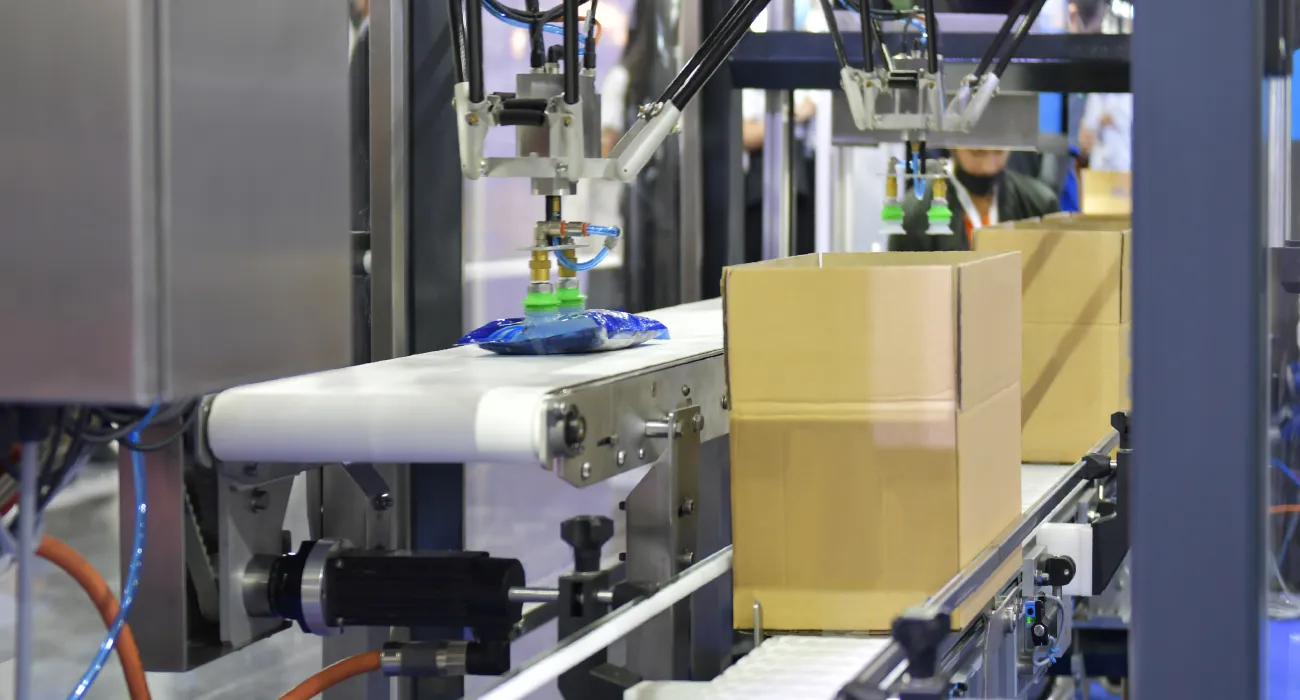
Hot melt equipment can be integrated into automated packaging machinery, helping manufacturers achieve repeatable adhesive application at production speed.
How Does a Hot Melt Adhesive System Work?
A typical industrial application process follows these steps:
1. Adhesive Loading
Solid adhesive is loaded into the equipment’s adhesive tank or reservoir.
2. Heating
The system heats the adhesive to its specified application temperature.
3. Melting
The solid adhesive changes into a molten state with the required viscosity.
4. Pumping
The molten material is transferred through the system toward the dispensing point.
5. Dispensing
A gun, nozzle, valve, or other applicator applies the adhesive to the packaging material.
6. Bond Formation
The packaging surfaces are brought together while the adhesive is still capable of creating the required bond.
7. Cooling and Setting
As the adhesive cools, it solidifies and creates the finished bond.
Temperature control, pressure, viscosity, and dispensing accuracy are important for maintaining consistent results.
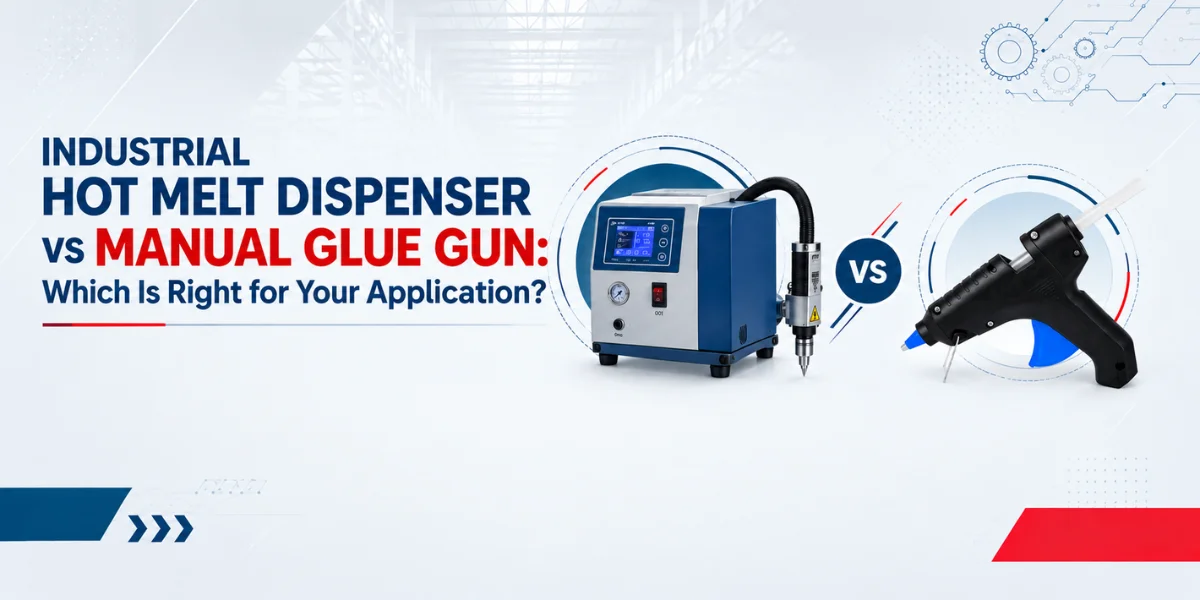
Manual vs Automated Hot Melt Application
The appropriate application method depends on production volume, packaging format, required precision, and available automation.
| Requirement | Manual Application | Automated Application |
|---|---|---|
| Production volume | Low to medium | Medium to high |
| Operator involvement | High | Lower |
| Application consistency | Depends on operator | Highly repeatable |
| Production speed | Moderate | High |
| Glue placement | Operator controlled | Programmed/controlled |
| Integration | Limited | Suitable for production lines |
| Best suited for | Small batches and flexible operations | Continuous production |
For businesses moving from manual packaging to higher production volumes, an automated dispensing system can provide better control over adhesive quantity and placement.
How to Choose the Right Adhesive Application Machine
Selecting the machine is as important as selecting the adhesive. Consider the following factors before investing:
1. Packaging Material
Identify whether you are working with corrugated board, paperboard, plastic, foil, laminate, or another substrate.
2. Production Speed
Calculate the required cartons, boxes, labels, or packages per hour. Higher production rates generally require more automated dispensing solutions.
3. Adhesive Type
Check the adhesive’s viscosity, melting range, open time, setting characteristics, and compatibility with the equipment.
4. Application Pattern
Determine whether the application requires dots, beads, lines, intermittent patterns, or continuous dispensing.
5. Adhesive Consumption
Accurate dosing can help control adhesive costs and prevent over-application.
6. Automation Requirements
For high-volume operations, consider equipment that can integrate with existing packaging machinery or production-line controls.
7. Maintenance and Service
The system should be easy to clean, maintain, troubleshoot, and service to minimize production interruptions.
Hot Melt Adhesive Machines by Mahisa Packaging
Mahisa Packaging Systems offers adhesive dispensing and packaging solutions for different production requirements.
EcoPlus Manual Glue Dispenser
The EcoPlus Manual Glue Dispenser is designed for controlled manual adhesive application and can be suitable for small- to medium-scale packaging operations where flexibility and operator control are important.
EcoStar Box Gluing Machine
The EcoStar Box Gluing Machine is designed for automated box gluing applications, helping manufacturers achieve consistent adhesive placement during higher-volume production.
SpeedPack Pasting Machine
The SpeedPack Pasting Machine is designed for packaging applications where efficient and consistent pasting is required. It can support production environments where speed and repeatability are important.
OneMelt Dispensing System
The OneMelt Dispensing System provides controlled adhesive dispensing for industrial applications requiring accurate and repeatable glue application.
Felix Gluer Machine
The Felix Gluer Machine is designed for automated box gluing and can be integrated into production workflows where consistent carton bonding and streamlined operations are required.
Common Problems When Using Adhesives in Packaging
Even a suitable adhesive can produce inconsistent results if the application system is not correctly configured.
Common issues include:
Poor Bond Strength
Possible causes include incompatible substrates, incorrect temperature, contaminated surfaces, or unsuitable adhesive formulation.
Excessive Glue Application
Too much adhesive can increase costs, create messy packaging, and affect appearance. Accurate dispensing and proper machine settings can help control consumption.
Incomplete Bonding
This can occur when surfaces do not make sufficient contact, the adhesive is outside its recommended application conditions, or the substrate is unsuitable.
Uneven Glue Patterns
Inconsistent dispensing may result from incorrect pressure, temperature fluctuations, blocked nozzles, or equipment maintenance issues.
Packaging Opening During Transit
If cartons open during transportation, manufacturers should evaluate adhesive selection, application quantity, compression time, substrate compatibility, and environmental conditions.
Best Practices for Packaging Adhesive Application
For consistent production performance:
- Match the adhesive to the packaging substrate.
- Follow the adhesive manufacturer’s recommended temperature range.
- Maintain consistent adhesive pressure and flow.
- Keep dispensing nozzles clean.
- Use the correct application pattern.
- Avoid excessive adhesive application.
- Check bond quality during production.
- Test packaging under actual transportation and storage conditions.
- Maintain dispensing equipment regularly.
- Use automation where production volume justifies it.
These practices can improve packaging consistency while reducing adhesive waste and production interruptions.
Conclusion
Adhesive technology plays an important role in modern packaging by supporting fast production, secure closures, and consistent package quality. From corrugated boxes and folding cartons to flexible packaging, labels, and e-commerce mailers, the right adhesive and dispensing equipment can make a significant difference to production efficiency.
Choosing the right solution requires more than selecting an adhesive. Manufacturers should consider the packaging material, production speed, adhesive characteristics, application pattern, required automation, and operating environment.
With solutions ranging from manual dispensing equipment to automated box gluing and industrial dispensing systems, Mahisa Packaging Systems helps manufacturers improve adhesive application and build more efficient packaging processes.
Frequently Asked Questions
What is the main use of hot melt adhesive in packaging?
Its main uses include corrugated box sealing, carton forming, case sealing, labeling, flexible packaging, and other packaging assembly applications where fast and reliable bonding is required.
Is hot melt adhesive suitable for corrugated boxes?
Yes. Suitable formulations are widely used for corrugated box sealing because they can provide fast setting and strong bonds while supporting high-speed packaging operations.
Can Mahisa Packaging provide machines for adhesive dispensing?
Yes. Mahisa Packaging offers solutions such as the EcoPlus Manual Glue Dispenser, EcoStar Box Gluing Machine, SpeedPack Pasting Machine, OneMelt Dispensing System, and Felix Gluer Machine for different packaging and adhesive application requirements.
How do I choose the right adhesive dispensing machine?
Consider the packaging material, adhesive characteristics, production speed, required glue pattern, application accuracy, adhesive consumption, level of automation, and maintenance requirements before selecting a machine.
Does Mahisa Packaging offer manual and automated adhesive solutions?
Yes. Mahisa Packaging provides both manual and automated solutions, allowing businesses to select equipment according to production volume, packaging format, and required dispensing control.
Can adhesive dispensing be automated for high-volume packaging?
Yes. Automated dispensing systems can control adhesive quantity and placement while integrating with packaging production lines. This can improve repeatability, production speed, and process control.