UV Adhesive For Glass

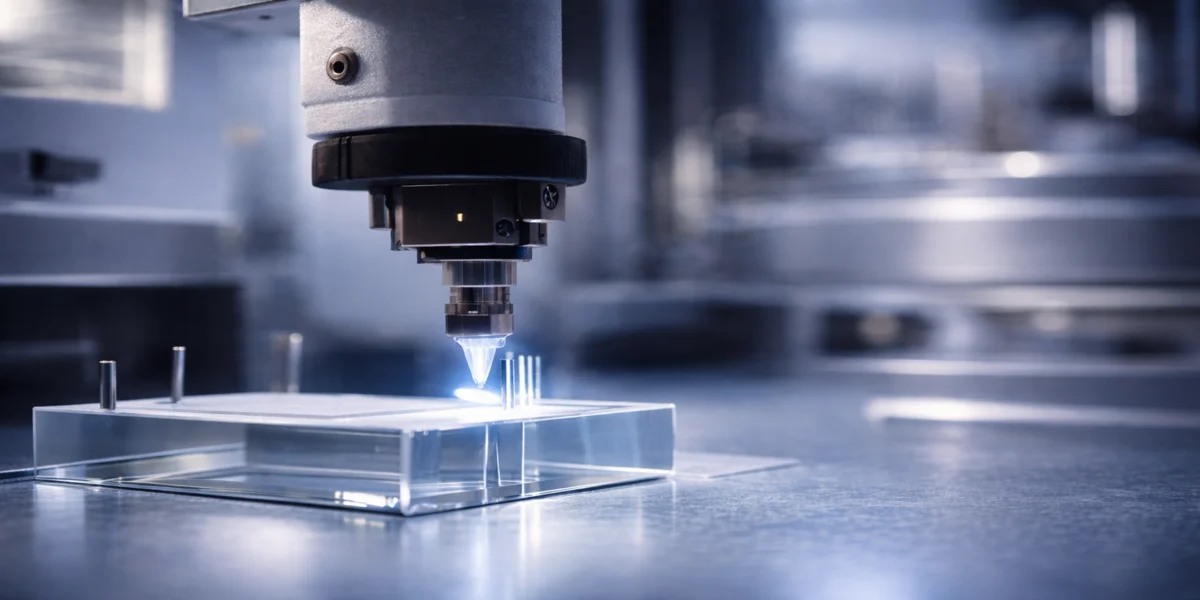
Utilizing a high-quality UV adhesive for glass is the industry standard for creating optically clear joints that are virtually undetectable. Unlike traditional epoxies, UV adhesive for glass allows for an “infinite” open time, meaning technicians can perfectly align complex components without the pressure of a fast-drying glue. Once the alignment is perfect, a burst of ultraviolet light creates a permanent, rock-solid connection in seconds. This precision makes it the preferred choice for high-end furniture, luxury display cases, and intricate glass art where both strength and visual perfection are required to meet premium quality standards.

How UV Curing Works

Understanding how UV curing works involves a deep dive into the rapid photochemical reaction triggered by specific light wavelengths. Essentially, how UV curing works is through photoinitiators within the liquid resin that absorb UV energy, instantly converting the liquid into a cross-linked solid polymer. This transformation happens in a matter of seconds, bypassing the long evaporation or cooling times required by solvent-based or hot-melt alternatives. This efficiency allows production lines to move faster while ensuring that the bond reaches its maximum tensile strength almost immediately after exposure to the curing lamp.

UV Adhesives Are Dominating The Market

It is no surprise that UV adhesives are dominating the market due to their zero-VOC emissions and incredible manufacturing speed. Across the globe, UV adhesives are dominating the market in sectors like medical device assembly and automotive sensors, where precision and clean-room compatibility are vital. Because these adhesives don’t shrink or yellow over time, they offer a level of reliability that mechanical clips simply cannot provide. Their ability to bond dissimilar materials like glass to metal or plastic further solidifies their position as the primary choice for modern industrial engineering and sustainable product design.

UV Bonding

In the world of high-end interior design and structural glazing, UV bonding has become a transformative technique for creating “all-glass” structures. Because UV bonding creates a joint that is often stronger than the glass itself, it allows for the creation of floating staircases, minimalist shelving, and seamless retail storefronts. This process eliminates the need for bulky metal brackets, allowing the natural beauty of the glass to take center stage. For professionals, mastering this technique ensures a finish that is not only structurally sound but also meets the highest aesthetic demands of contemporary luxury spaces.
Future Of Glass Bonding
The future of glass bonding is rapidly evolving toward invisible, high-strength structural solutions that redefine modern architecture. As industries demand sleeker designs with fewer mechanical fasteners, the future of glass bonding relies on advanced polymer chemistry to ensure long-term durability against environmental stressors. Innovation in this field is focused on achieving “cold bonding” techniques that maintain the temper and integrity of the glass while providing a seamless aesthetic. This progression is essential for the next generation of smart windows and high-tech displays where clarity and structural reliability are non-negotiable for manufacturers.
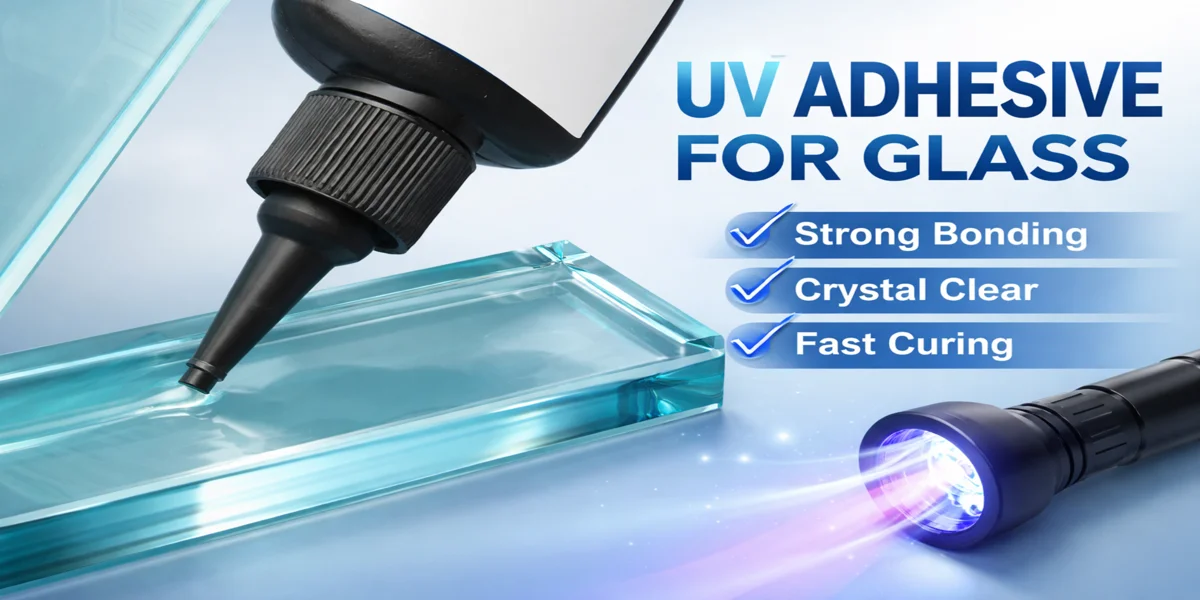
Future Of Glass Bonding, UV Adhesive For Glass, How UV Curing Works, UV Adhesives Are Dominating The Market, UV Adhesive Applications, Mahisa Packaging

The Future of Glass Bonding: Why UV Adhesives Are Taking Over

The Future of Glass Bonding: Why UV Adhesives Are Taking Over
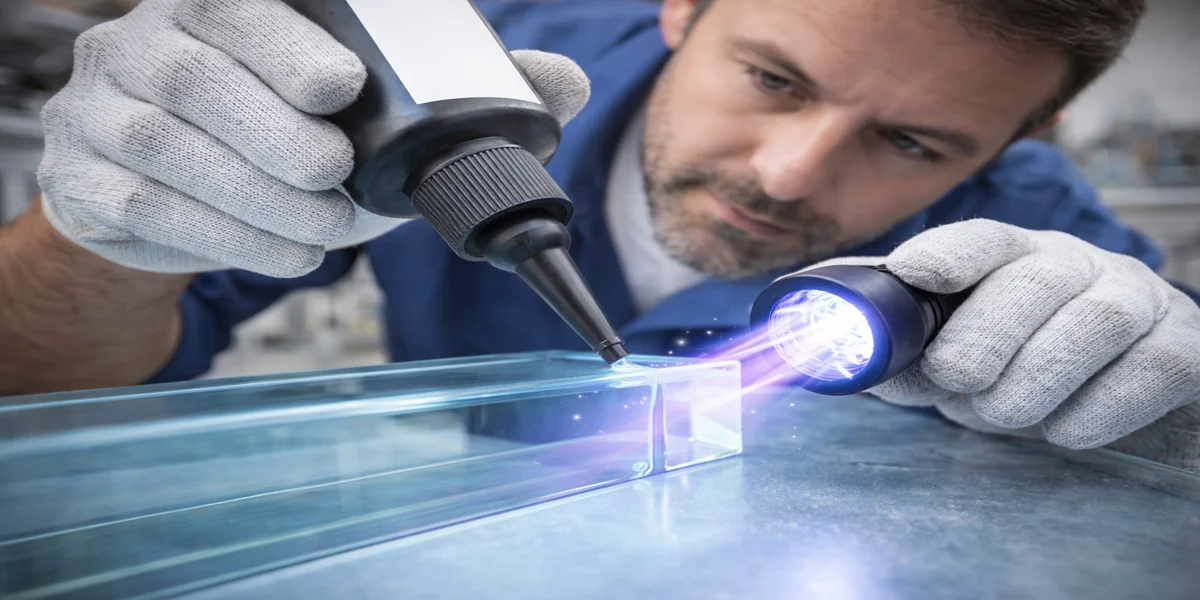
The glass industry is evolving rapidly. From ultra-slim smartphones to modern architectural structures, the way glass components are bonded has transformed significantly. Traditional fastening methods and conventional glues are no longer sufficient for today’s precision-driven applications.
This is where uv adhesive for glass is making a major impact. It offers a faster, cleaner, and more efficient bonding solution that aligns perfectly with modern manufacturing and design needs.
In this blog, we explore how UV curing works, why it’s gaining popularity, and where it is being used across industries.

What is UV Adhesive for Glass?

Future Of Glass Bonding, UV Adhesive For Glass, How UV Curing Works, UV Adhesives Are Dominating The Market, UV Adhesive Applications, Mahisa Packaging
A UV adhesive is a light-curable resin that remains liquid until exposed to ultraviolet light. Unlike traditional adhesives that rely on evaporation or chemical mixing, UV adhesives cure through a process called photopolymerization.

How the Process Works

Application:
The adhesive is applied to the glass surface without time pressure, allowing precise alignment.
Assembly:
The surfaces are joined, forming a thin and uniform adhesive layer.
Curing:
UV light is applied, instantly converting the liquid into a solid, high-strength bond.
This controlled curing process ensures accuracy and reduces errors during assembly.

Why UV Adhesives Are Dominating the Market

Future Of Glass Bonding, UV Adhesive For Glass, How UV Curing Works, UV Adhesives Are Dominating The Market, UV Adhesive Applications, Mahisa Packaging
The growing preference for uv adhesive for glass is not just about speed it’s about performance, aesthetics, and efficiency.

1. Optical Clarity and Invisible Bonds

Glass applications demand a flawless finish.
Refractive Index Matching:
UV adhesives can match the optical properties of glass, making joints nearly invisible.
Non-Yellowing Performance:
These adhesives resist discoloration, maintaining clarity over time.

2. Superior Strength and Durability

Despite being light-cured, UV adhesives provide exceptional bonding strength.
• They form a cross-linked polymer structure.
• They resist shear stress, vibration, and impact.

In many cases, the bond can be stronger than the glass itself.

3. Faster Production Cycles

Time efficiency is a major advantage.
Instant curing (5–30 seconds)
• No need for clamping or long drying times
• Increased production output with reduced space requirements

UV Adhesive Applications Across Industries

The versatility of uv adhesive for glass has led to widespread adoption across multiple sectors.

Furniture and Interior Design

Modern glass furniture relies heavily on UV bonding. It allows designers to eliminate bulky fixtures and achieve clean, seamless aesthetics.

Electronics and Optoelectronics

UV adhesives are used in smartphones, tablets, and displays to bond glass layers with precision. This improves touch sensitivity and device slimness.

Medical Devices

In medical applications, UV adhesives are valued for:
• Biocompatibility
• Sterilization resistance
• Precision bonding
They are used in syringes, lab equipment, and diagnostic tools.

Automotive Glass

UV adhesives are used in:
• Rearview mirror mounting
• Windshield components
• Smart glass systems
They provide strong adhesion and vibration resistance.

Advantages Over Traditional Bonding Methods

Feature

UV Adhesive

Cyanoacrylate

Epoxy

Cure Speed

Seconds (controlled)

Instant (uncontrolled)

Hours

Clarity

Excellent

Poor

Moderate

Cleanup

Easy

Difficult

Messy

Precision

High

Low

Medium

UV adhesives clearly outperform traditional options in precision and aesthetics.

Challenges and Considerations

While uv adhesive for glass offers many benefits, there are a few limitations to consider:

1. The Shadow Effect

UV light must reach the adhesive for curing. If parts of the bond line are blocked, curing may remain incomplete.

2. Equipment Requirements

UV bonding requires specialized equipment such as:
• UV lamps
• LED curing systems
• Industrial curing setups
This adds an initial investment cost.

The Environmental Advantage

Sustainability is becoming increasingly important, and UV adhesives support eco-friendly manufacturing.
Zero VOC emissions (solvent-free formulations)
Lower energy consumption (no heat curing required)
Reduced material waste (no premature curing)
These factors make UV adhesives a greener alternative.

Conclusion: The Future is Clear

The rise of uv adhesive for glass reflects a broader shift toward precision, efficiency, and sustainability in manufacturing.
Whether used in electronics, furniture, or industrial applications, UV adhesives deliver unmatched clarity, strength, and speed. As industries continue to innovate, UV bonding is set to become the standard solution for glass assembly.

FAQ's

What is the best UV adhesive for glass?

The best UV adhesive depends on the application. For structural glass furniture, a high-viscosity resin with high shear strength is ideal. For electronics, a low-viscosity, optically clear adhesive (LOCA) is preferred. Always look for "medical grade" or "industrial grade" certifications for high-stress applications.

Can I use UV adhesive on colored or UV-coated glass?

It is possible, but difficult. Some colored glass blocks the specific UV wavelengths needed for curing. In these cases, you may need a high-intensity lamp or a visible-light-cured adhesive that reacts to blue light rather than UV.

Is UV adhesive waterproof?

Most industrial-grade UV adhesives are highly water-resistant. However, for constant submersion (like an aquarium), specialized formulations are required to prevent the bond from degrading over time due to hydrolytic attack.

What is UV Glue Tempered Glass?

UV glue tempered glass refers to a screen protector or glass panel installation method that uses a liquid optically clear adhesive (LOCA) which hardens only when exposed to ultraviolet light. Unlike traditional "peel-and-stick" protectors, the liquid UV glue fills the microscopic gaps between the tempered glass and the device surface, ensuring a perfect, bubble-free bond and maintaining high touch sensitivity on curved screens.

How to Use UV Glue for Glass?

To achieve a professional-grade bond, follow these steps:

  1. Clean the Surface: Thoroughly clean both glass substrates with isopropyl alcohol to remove oils and dust.
  2. Apply the Glue: Dispense a controlled amount of UV adhesive in the center of the surface. For large panels, use a "spider" or "X" pattern to prevent air pockets.
  3. Position the Glass: Gently lower the top piece of glass onto the glue. Allow the weight of the glass to spread the liquid naturally to the edges. Do not press down firmly, as this can cause uneven bonding.
  4. Cure with UV Light: Once aligned, shine a UV lamp (typically 365nm to 395nm) over the entire bonded area. Initial "tack" curing takes 10–30 seconds, while a full structural cure usually requires 2–5 minutes of continuous exposure.

Where to Buy UV Glue for Glass?

You can find high-quality UV glass adhesives through several channels:

  • Specialty Hardware Stores: Look for brands like Loctite or Gorilla in the adhesive section.
  • Industrial Suppliers: For structural glass or furniture repair, suppliers like McMaster-Carr or specialized glass hardware retailers offer industrial-strength resins.
  • Online Marketplaces: Amazon, eBay, and specialized electronics repair sites (like iFixit) are excellent for phone-specific UV tempered glass kits.
  • Craft & Jewelry Stores: Often stock small vials of UV resin for glass-based jewelry making.