Modern manufacturing demands speed, accuracy, and consistency. Whether you’re in packaging, woodworking, automotive, electronics, textiles, or product assembly, choosing the right hot melt adhesive dispenser can significantly improve production efficiency while reducing adhesive waste.
A high-performance hot melt adhesive system ensures precise glue application, better bonding strength, lower operating costs, and increased production speed. But what features truly define a reliable dispensing system?
This guide explains the essential features every business should consider before investing in a Glue Dispensing Machine.
What Is a Hot Melt Adhesive Dispenser?
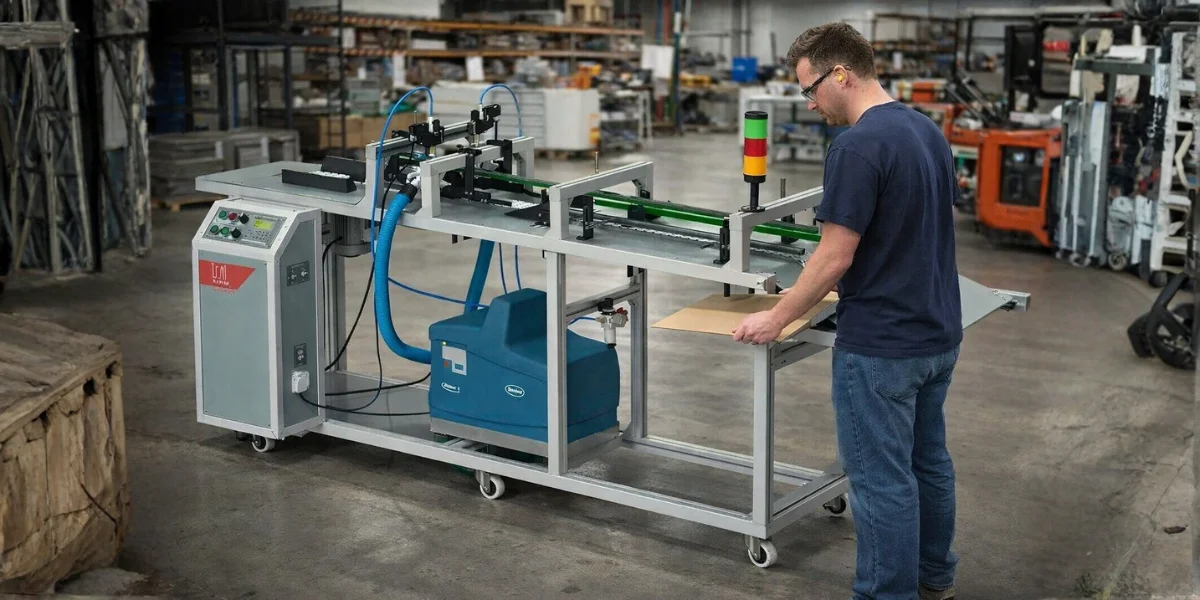
A hot melt adhesive dispenser is an industrial machine that heats solid adhesive into liquid form and accurately applies it onto products or surfaces. Unlike solvent-based adhesives, hot melt adhesives solidify quickly as they cool, creating a strong and durable bond within seconds.
These systems are widely used across industries where high-speed production and reliable adhesive application are critical.
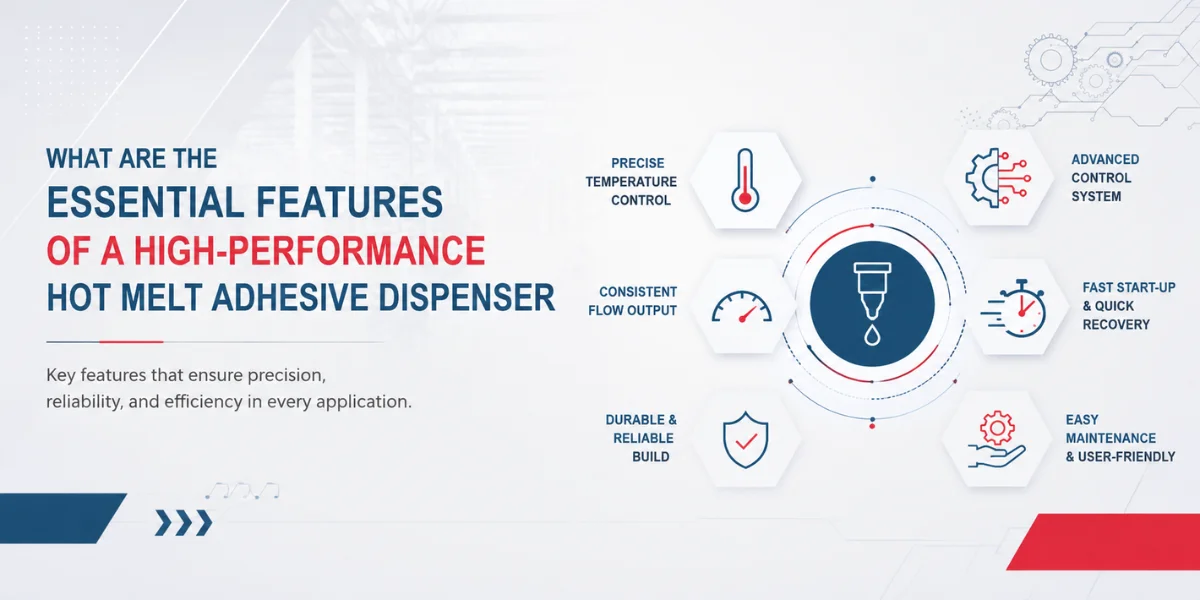
Essential Features of a High-Performance Hot Melt Adhesive Dispenser
1. Precise Temperature Control
One of the most important features is intelligent temperature management.
A quality hot melt glue machine maintains a consistent adhesive temperature throughout the melting and dispensing process. Stable temperatures preserve the hot melt adhesive properties, prevent adhesive degradation, and ensure strong, consistent bonds.
Benefits include:
1. Uniform adhesive viscosity
2. Better bond strength
3. Reduced carbonization
4. Longer adhesive life
2. Accurate Glue Dispensing
Precision directly affects product quality.
A modern Adhesive Dispenser Machine delivers controlled adhesive volumes with minimal variation. Whether applying dots, beads, lines, or spray patterns, accurate dispensing minimizes waste and improves production consistency.
High-precision systems also help reduce excess adhesive consumption, lowering operating costs.
3. Fast Heating Technology
Downtime affects productivity.
A high-performance Hot Melt Glue Machine heats adhesives rapidly while maintaining stable operating temperatures during continuous production.
Fast heating offers:
1. Reduced startup time
2. Higher production efficiency
3. Continuous operation
4. Improved workflow
4. Compatibility with Multiple Adhesive Formulations
Different industries require different adhesives.
An efficient hot melt applicator should support various hot melt adhesive formulation types, including:
1. EVA Hot Melt Adhesives
2. Polyolefin Adhesives
3. Polyamide Adhesives
4. Pressure Sensitive Adhesives (PSA)
5. Polyurethane Reactive (PUR) Adhesives
This flexibility allows manufacturers to adapt to different production requirements without changing equipment.
5. Automated Dispensing Controls
Today’s manufacturing facilities increasingly rely on automation.
An Automated Glue Dispensing Machine integrates with production lines using programmable controllers and sensors to deliver consistent adhesive application at high speeds.
Advantages include:
1. Reduced manual intervention
2. Higher production output
3. Improved repeatability
4. Lower labor costs
5. Enhanced product consistency
Automation is especially valuable for industries operating 24/7 production lines.
6. Durable Industrial Construction
Industrial environments require machines that can withstand continuous operation.
A reliable industrial glue dispenser should feature:
1. Heavy-duty construction
2. Corrosion-resistant components
3. High-quality heating tanks
4. Durable hoses
5. Long-life dispensing modules
Robust construction minimizes maintenance while extending machine lifespan.
7. Easy Maintenance
Maintenance directly impacts operational costs.
The best industrial adhesive dispenser systems are designed for:
1. Quick cleaning
2. Easy filter replacement
3. Accessible components
4. Simplified troubleshooting
Routine maintenance becomes faster, helping reduce production downtime.
8. Multiple Dispensing Options
Different products require different adhesive application methods.
A versatile hot melt adhesive application system supports:
1. Dot dispensing
2. Bead dispensing
3. Spray application
4. Slot coating
5. Spiral spray
6. Continuous line dispensing
This flexibility makes one machine suitable for multiple manufacturing applications.
9. Safety Features
Working with heated adhesives requires built-in safety.
A high-quality hot melt adhesive dispenser should include:
1. Over-temperature protection
2. Automatic shutdown systems
3. Insulated heating components
4. Pressure monitoring
5. Leak prevention mechanisms
These features protect operators while ensuring uninterrupted production.
10. Energy-Efficient Operation
Modern dispensing systems focus on reducing energy consumption.
Energy-efficient Hot Melt Glue Machines use intelligent heating systems that maintain operating temperatures without unnecessary power usage.
Benefits include:
1. Lower electricity costs
2. Reduced environmental impact
3. Improved operating efficiency
4. Longer heater life
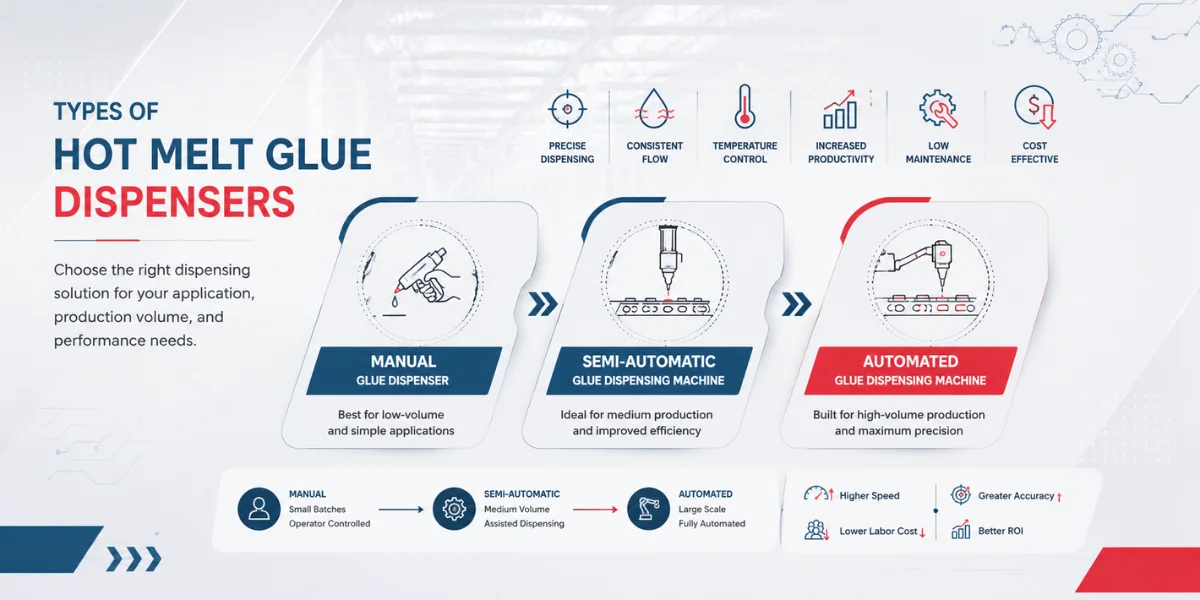
Types of Hot Melt Glue Dispensers
Different production environments require different dispensing systems.
Manual Glue Dispenser
A manual glue dispenser is ideal for low-volume production, repair work, prototypes, and small assembly operations where flexibility is more important than speed.
Semi-Automatic Glue Dispensing Machine
These machines combine operator control with automated dispensing, making them suitable for medium-volume manufacturing.
Automated Glue Dispensing Machine
An Automated Glue Dispensing Machine is designed for high-speed industrial production. It offers programmable adhesive application, exceptional accuracy, and consistent performance across continuous production lines.
A manual glue dispenser is suitable for low-volume production and repair work, while an automated glue dispensing machine is designed for high-speed production lines, offering greater precision, consistency, and productivity with minimal operator intervention.
When selecting a hot melt adhesive dispenser, consider adhesive compatibility, tank capacity, dispensing accuracy, temperature control, automation capabilities, maintenance requirements, production speed, and energy efficiency.
Mahisa Packaging offers advanced hot melt adhesive dispensing systems designed for precision, durability, energy efficiency, and seamless integration into industrial production lines. Their solutions help manufacturers improve productivity, reduce adhesive waste, and maintain consistent product quality across various industries.
Advantages Of Hot Melt Glue Dispenser
Investing in a professional hot melt adhesive dispenser provides several operational benefits:
1. Faster production cycles
2. Strong and reliable bonding
3. Reduced adhesive waste
4. Lower operating costs
5. High dispensing accuracy
6. Consistent product quality
7. Easy automation integration
8. Minimal maintenance
9. Improved workplace safety
10. Higher manufacturing efficiency
Modern hot melt adhesive dispensers are designed with energy-saving heating systems that maintain stable temperatures while consuming less electricity, helping manufacturers reduce operational costs.
Hot melt adhesives offer fast curing, strong bonding, solvent-free application, low VOC emissions, excellent versatility, minimal waste, and compatibility with automated manufacturing systems.
A hot melt adhesive dispenser automates the adhesive application process, reducing manual labor, minimizing glue wastage, and ensuring consistent bonding. This improves production speed, product quality, and overall manufacturing efficiency.
A hot melt adhesive dispenser automates the adhesive application process, reducing manual labor, minimizing glue wastage, and ensuring consistent bonding. This improves production speed, product quality, and overall manufacturing efficiency.
Hot Melt Glue Applications
Modern Hot Melt Glue Applications span a wide range of industries, including:
1. Packaging and carton sealing
2. Product assembly
3. Automotive manufacturing
4. Furniture production
5. Bookbinding
6. Electronics assembly
7. Textile manufacturing
8. Labeling
9. Paper converting
10. Mattress manufacturing
11. Filter production
12. Medical product assembly
Hot melt glue applications include carton sealing, product packaging, furniture assembly, woodworking, automotive component bonding, electronics manufacturing, bookbinding, labeling, textile lamination, and consumer goods assembly. Its fast curing time and strong bond make it suitable for high-speed industrial production.
Hot melt adhesive is widely used in packaging because it creates strong, instant bonds on cardboard, paper, and corrugated boxes. It helps manufacturers increase production speed, reduce downtime, and ensure secure packaging for shipping and storage.
Yes. Hot melt adhesives can bond a variety of materials, including paper, cardboard, wood, plastics, foam, fabric, leather, rubber, and some metals. Choosing the correct hot melt adhesive formulation ensures optimal performance for each application.
Hot melt adhesive applications are commonly found in packaging, food and beverage, automotive, furniture manufacturing, electronics, textile, healthcare, paper converting, labeling, bookbinding, and appliance manufacturing industries due to their speed, reliability, and cost-effectiveness.
Uses Of Hot Melt Glue Across Industries
The Uses Of Hot Melt Glue continue to grow due to its fast curing and strong adhesion.
Manufacturers commonly use hot melt adhesives for:
1. Bonding paper and cardboard
2. Plastic component assembly
3. Woodworking
4. Foam bonding
5. Fabric lamination
6. Packaging closures
7. Product labeling
8. Electronic component fixing
9. Automotive interiors
10. Consumer goods manufacturing
Why Choosing the Right Hot Melt Adhesive Manufacturer Matters
Machine performance depends not only on equipment but also on adhesive quality.
Leading hot melt adhesive manufacturers develop adhesives specifically designed for different substrates, operating temperatures, and production speeds. Using high-quality adhesives ensures optimal bonding performance while protecting dispensing equipment from contamination and excessive maintenance.
Conclusion
A high-performance hot melt adhesive dispenser is more than just a glue application machine, it is an essential productivity tool for modern manufacturing. From accurate dispensing and intelligent temperature control to automation compatibility and energy efficiency, the right equipment helps businesses improve product quality while lowering operational costs.
Whether you require a Glue Dispensing Machine, an industrial hot melt glue gun, an Automated Glue Dispensing Machine, or a complete industrial adhesive dispenser solution, investing in advanced hot melt technology ensures consistent adhesive application, higher production efficiency, and long-term manufacturing reliability.
FAQ's
A hot melt adhesive dispenser melts solid adhesive and applies it precisely for packaging, woodworking, automotive, furniture, electronics, and industrial manufacturing applications.
An Automated Glue Dispensing Machine improves production speed, reduces adhesive waste, increases accuracy, lowers labor costs, and delivers consistent adhesive application throughout high-volume manufacturing.
An industrial glue dispenser is commonly used in packaging, automotive, furniture manufacturing, electronics, textiles, bookbinding, labeling, paper converting, and product assembly industries.
Look for temperature control, dispensing accuracy, automation compatibility, energy efficiency, safety features, maintenance requirements, adhesive compatibility, and overall production capacity.
Yes. Most industrial hot melt applicator systems support multiple hot melt adhesive formulation types, including EVA, PUR, PSA, Polyamide, and Polyolefin adhesives.