Investing in industrial hot melt machines is a significant decision for manufacturers looking to improve production efficiency, reduce adhesive waste, and maintain consistent product quality. Whether you operate in packaging, woodworking, automotive, furniture, electronics, textiles, bookbinding, or hygiene product manufacturing, choosing the right hot melt adhesive system directly impacts productivity and operational costs.
One of the most common questions manufacturers ask is:
“How much does an industrial hot melt machine cost?”
The answer depends on several factors, including machine capacity, automation level, adhesive type, production speed, application requirements, and long-term maintenance.
This guide explains everything you need to know about the cost of industrial hot melt machines, the factors affecting pricing, hidden ownership costs, and how to choose the right machine for your manufacturing requirements.
What Is an Industrial Hot Melt Machine?
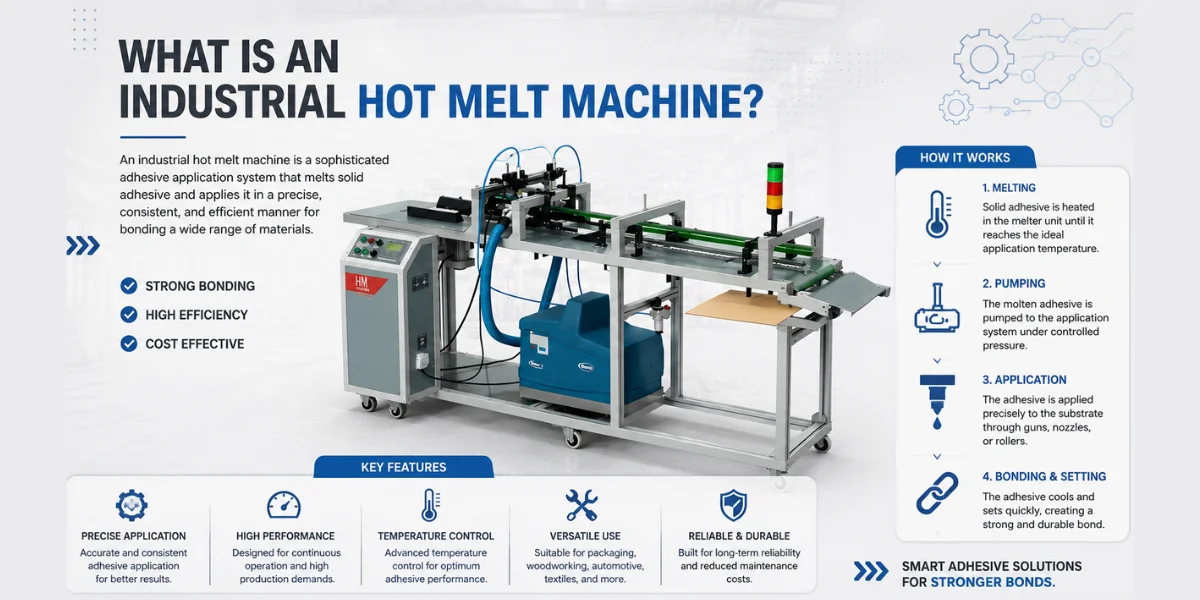
An industrial hot melt machine is an adhesive dispensing system that melts solid hot melt adhesive and delivers it precisely through hoses and applicators onto products or packaging materials.
These machines are widely used for:
1. Carton sealing
2. Product packaging
3. Furniture assembly
4. Automotive interiors
5. Textile lamination
6. Bookbinding
7. Electronics manufacturing
8. Hygiene product production
9. Label application
Industrial hot melt systems are designed for continuous production where speed, precision, and adhesive consistency are essential.
What Is the Average Cost of an Industrial Hot Melt Machine?
There is no single price because machines vary significantly based on production requirements.
Typical pricing depends on:
1. Tank capacity
2. Number of adhesive outlets
3. Pump technology
4. Heating system
5. Automation features
6. Digital controls
7. Production volume
8. Brand and country of manufacture
Small manual systems generally cost much less than fully automated, high-capacity industrial adhesive dispensing systems designed for 24/7 production.
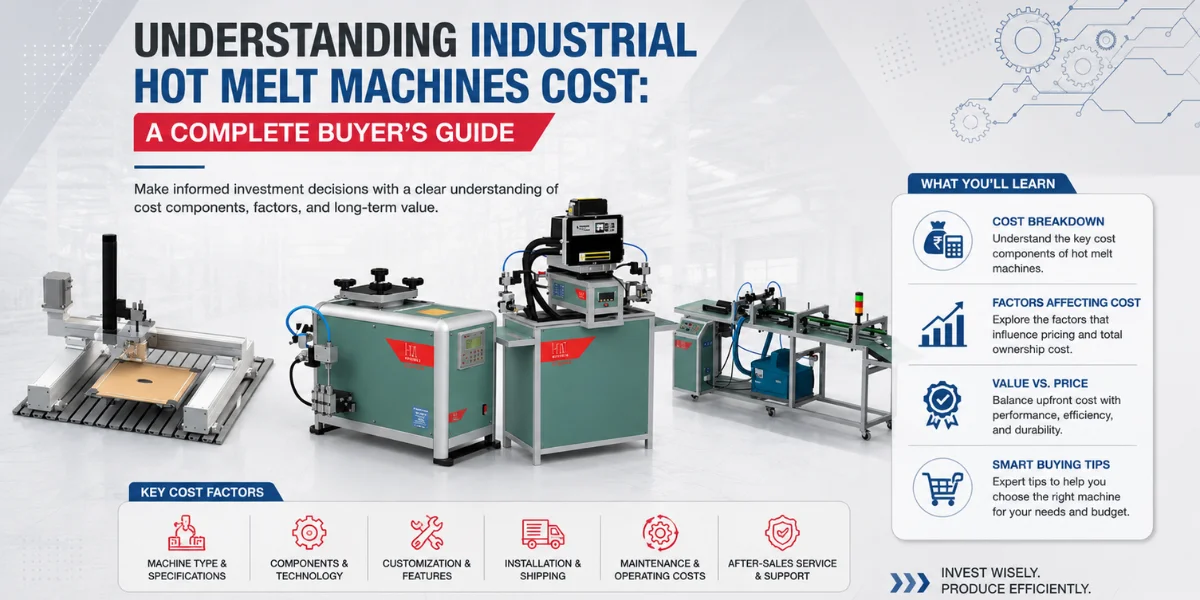
Instead of focusing only on the initial purchase price, manufacturers should evaluate the total cost of ownership over the machine’s lifetime.
Factors That Affect the Cost of Industrial Hot Melt Machines
1. Tank Capacity
Tank size is one of the biggest pricing factors.
Smaller tanks are suitable for low-volume manufacturing, while larger tanks support continuous production without frequent adhesive refilling.
Larger capacity machines generally offer:
1. Higher productivity
2. Less downtime
3. Better production efficiency
4. Reduced labour interruptions
However, they also require a higher initial investment.
2. Number of Adhesive Guns
Industrial hot melt machines may support:
1. Single applicator
2. Dual applicators
3. Four applicators
4. Six or more adhesive guns
The more dispensing points required, the more sophisticated the system becomes.
Multiple guns improve production speed but increase machine cost due to additional hoses, controllers, and heating channels.
3. Production Speed
Production speed directly influences equipment selection.
A machine designed for:
1. Small batch manufacturing
2. Medium production
3. High-speed packaging lines
4. Fully automated assembly
will have very different pricing.
High-speed systems require faster adhesive melting, stable temperature control, and continuous pressure, making them more expensive.
4. Level of Automation
Automation significantly impacts machine cost.
Basic machines typically include:
1. Manual controls
2. Standard temperature settings
3. Basic adhesive application
Advanced industrial hot melt machines include:
1. PLC controls
2. Touchscreen interface
3. Automatic temperature management
4. Pressure monitoring
5. Production line integration
6. Remote diagnostics
7. IoT monitoring
8. Predictive maintenance alerts
Although automated systems cost more initially, they often reduce operating costs over time.
5. Adhesive Compatibility
Not all machines work with every adhesive type.
Some systems are designed for:
1. EVA hot melt
2. PUR hot melt
3. Pressure-sensitive adhesives
4. Polyolefin adhesives
5. Specialty industrial adhesives
Machines capable of handling multiple adhesive types generally command higher prices because of their specialised heating and pumping technology.
6. Temperature Control Accuracy
Precise temperature control ensures:
1. Better bonding
2. Reduced adhesive degradation
3. Consistent product quality
4. Lower adhesive waste
Industrial systems with advanced heating zones and digital temperature control typically cost more but provide greater process reliability.
7. Pump Technology
Different pump systems affect both performance and pricing.
Common options include:
1. Gear pumps
2. Piston pumps
3. Variable-speed pumps
Higher-quality pumping systems deliver:
1. Stable adhesive flow
2. Better application accuracy
3. Longer service life
4. Lower maintenance
8. Build Quality
Industrial hot melt machines are expected to operate continuously in demanding environments.
Premium machines often feature:
1. Stainless steel construction
2. High-quality insulation
3. Durable heating elements
4. Heavy-duty motors
5. Corrosion-resistant components
Superior construction increases machine lifespan and reduces repair costs.
Consider production volume, adhesive type, automation requirements, dispensing accuracy, maintenance support, and future scalability.
Yes. Energy-efficient systems reduce electricity consumption, minimise heat loss, and lower overall operating expenses over time.
If production is expected to grow, investing in a scalable machine with additional capacity can reduce future upgrade costs.
Yes. Many modern systems support PLC integration, conveyor synchronisation, robotic dispensing, and Industry 4.0 connectivity.
Preventive maintenance schedules vary by usage, but regular cleaning, filter replacement, hose inspection, and calibration help ensure consistent performance.
Packaging, automotive, furniture, woodworking, electronics, textiles, hygiene products, and bookbinding industries commonly use industrial hot melt machines for reliable adhesive application.
Hidden Costs to Consider Before Buying
Many buyers focus only on the purchase price.
However, several ongoing costs influence the total investment.
Adhesive Consumption
A poorly designed dispensing system may apply more adhesive than necessary.
Precision dispensing reduces:
1. Adhesive waste
2. Material costs
3. Product rejects
Even small reductions in adhesive usage can generate substantial savings over time.
Energy Consumption
Industrial hot melt machines operate using heated tanks and hoses.
Energy-efficient systems help reduce:
1. Electricity costs
2. Heat loss
3. Startup time
4. Overall operating expenses
Modern machines with insulated tanks and intelligent heating controls are often more economical to operate.
Maintenance Costs
Maintenance varies depending on machine quality.
Typical maintenance includes:
1. Filter replacement
2. Hose inspection
3. Nozzle cleaning
4. Pump servicing
5. Temperature calibration
Reliable equipment generally requires fewer repairs and experiences less downtime.
Spare Parts Availability
Low-cost machines may appear attractive initially but can become expensive if spare parts are difficult to source.
Choose manufacturers offering:
1. Readily available spare parts
2. Technical support
3. Service engineers
4. Preventive maintenance programmes
Downtime Costs
Machine breakdowns affect production schedules.
Unexpected downtime may result in:
1. Missed delivery deadlines
2. Increased labour costs
3. Production losses
4. Customer dissatisfaction
Investing in dependable equipment often lowers long-term operational risks.
How to Choose the Right Industrial Hot Melt Machine
Rather than selecting the cheapest machine, evaluate your manufacturing needs.
Ask yourself:
1. What products am I producing?
2. What adhesive will I use?
3. What production speed is required?
4. Will production expand in the future?
5. How many dispensing points are needed?
6. Is automation necessary?
7. What maintenance support is available?
Matching the machine to your production requirements provides better long-term value than simply choosing the lowest-priced option.
Industries That Benefit from Industrial Hot Melt Machines
Industrial hot melt systems are widely used across multiple sectors.
Packaging Industry
1. Carton sealing
2. Case erecting
3. Tray forming
4. Label application
Furniture Manufacturing
1. Edge banding
2. Cabinet assembly
3. Upholstery
4. Wood bonding
Automotive Industry
1. Interior trim
2. Headliners
3. Seating components
4. Wire harness assembly
Electronics
1. Component fixing
2. Cable management
3. Protective sealing
Textile Industry
1. Fabric lamination
2. Nonwoven bonding
3. Product assembly
Bookbinding
1. Spine gluing
2. Cover attachment
3. Magazine production
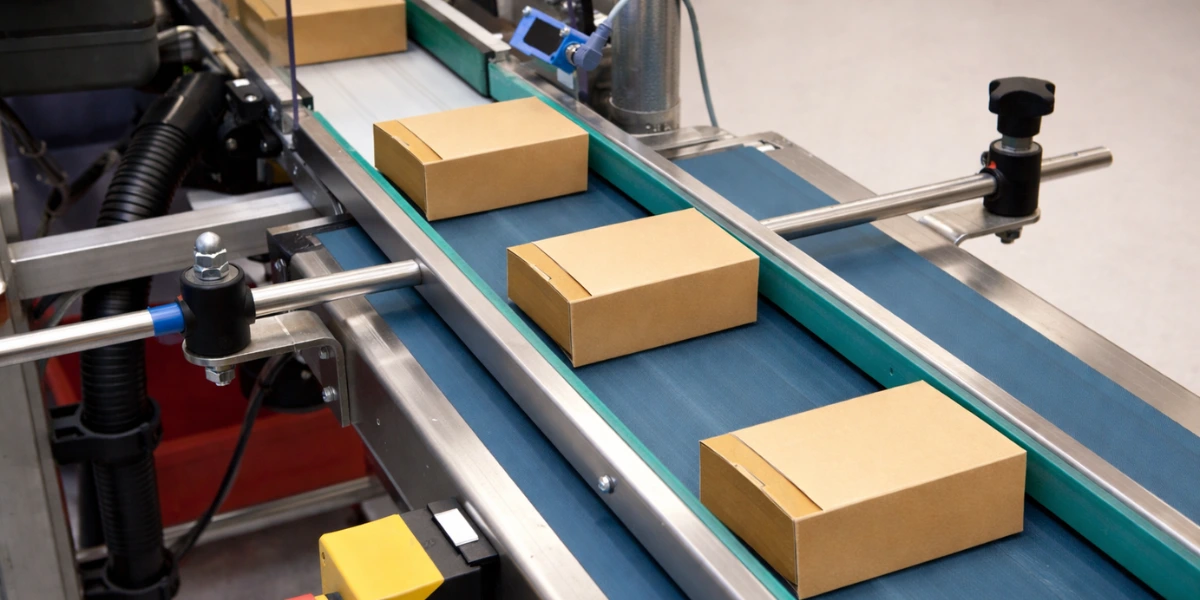
The packaging industry is one of the largest users of industrial hot melt machines due to the need for fast, reliable carton sealing, case packing, and product assembly. However, automotive, furniture, electronics, and hygiene product manufacturers also depend heavily on hot melt adhesive systems.
Yes. Industrial hot melt machines can be configured with different tank sizes, applicators, hoses, and dispensing patterns to meet the unique requirements of industries such as woodworking, textiles, packaging, automotive, and electronics manufacturing.
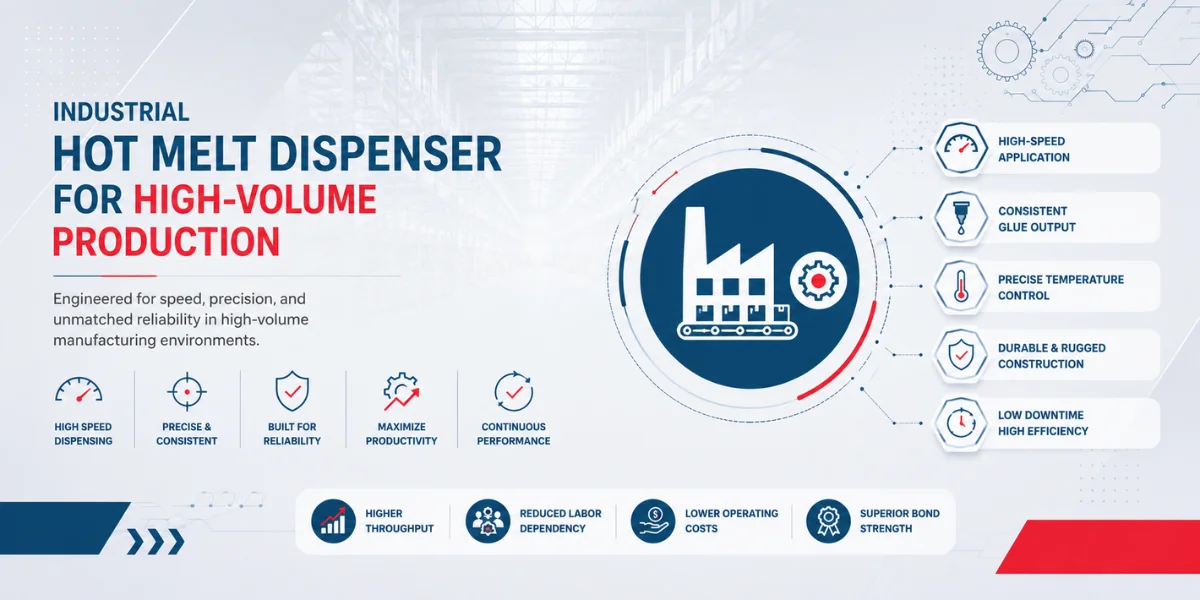
Hot melt adhesive systems offer fast curing times, consistent adhesive application, minimal production delays, and reduced material waste, making them ideal for high-speed manufacturing environments where efficiency is critical.
Yes. Industrial hot melt machines are available in various capacities, allowing small businesses, medium-sized manufacturers, and large-scale production facilities to choose a system that matches their production volume and operational needs.
Industrial hot melt machines automate adhesive application, improve bonding consistency, reduce manual labour, minimise adhesive waste, and increase production speed, helping manufacturers enhance productivity while maintaining product quality.
Why High-Quality Machines Save Money
Although premium industrial hot melt machines require a larger upfront investment, they often reduce costs by:
1. Lower adhesive consumption
2. Reduced maintenance
3. Improved bonding consistency
4. Faster production
5. Lower energy usage
6. Fewer rejected products
7. Reduced downtime
8. Longer equipment lifespan
For manufacturers with continuous production, these savings often outweigh the initial purchase price.
Conclusion
Choosing the right industrial hot melt machine is about more than finding the lowest purchase price. Packaging Manufacturers should evaluate machine capacity, automation, adhesive compatibility, energy efficiency, maintenance requirements, and long-term reliability to make an informed investment.
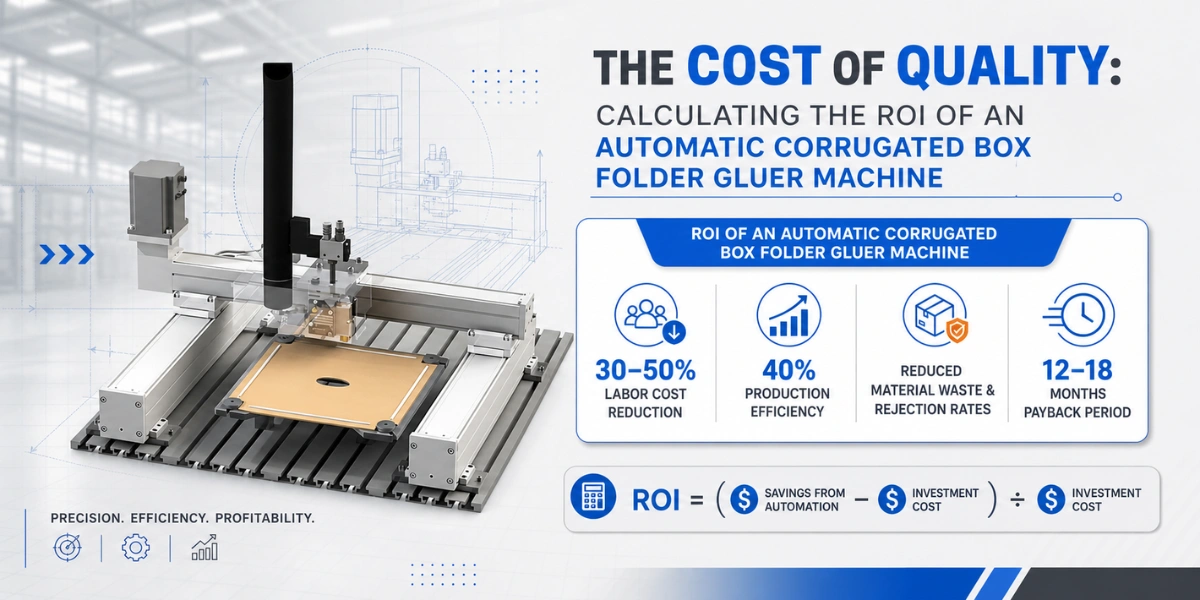
A well-designed industrial hot melt system enhances production speed, improves bonding quality, reduces adhesive waste, and lowers operating costs over time. By focusing on total value instead of upfront expense, businesses can achieve better productivity, consistent product quality, and a stronger return on investment.
Whether you are upgrading an existing production line or installing a new adhesive dispensing system, selecting the right industrial hot melt machine will support efficient manufacturing and sustainable business growth.
FAQ's
The cost depends on factors such as tank size, automation level, adhesive compatibility, number of applicators, production speed, and advanced control features. Businesses should compare the total cost of ownership rather than just the purchase price.
The biggest pricing factors include machine capacity, automation, heating technology, dispensing accuracy, adhesive type, production speed, and build quality.
Yes. Automated systems improve consistency, reduce adhesive waste, minimise operator errors, increase production efficiency, and lower long-term operating costs.
Some industrial hot melt machines are designed to work with multiple adhesive types, while others are built for specific adhesives such as EVA or PUR. Always confirm compatibility before purchasing.
With proper maintenance, a high-quality industrial hot melt machine can operate efficiently for many years. Routine servicing, timely replacement of wear parts, and correct operating practices help maximise its lifespan.
Businesses can reduce costs by choosing energy-efficient machines, using precision dispensing systems, scheduling preventive maintenance, selecting the right adhesive, and optimising application settings to minimise waste.