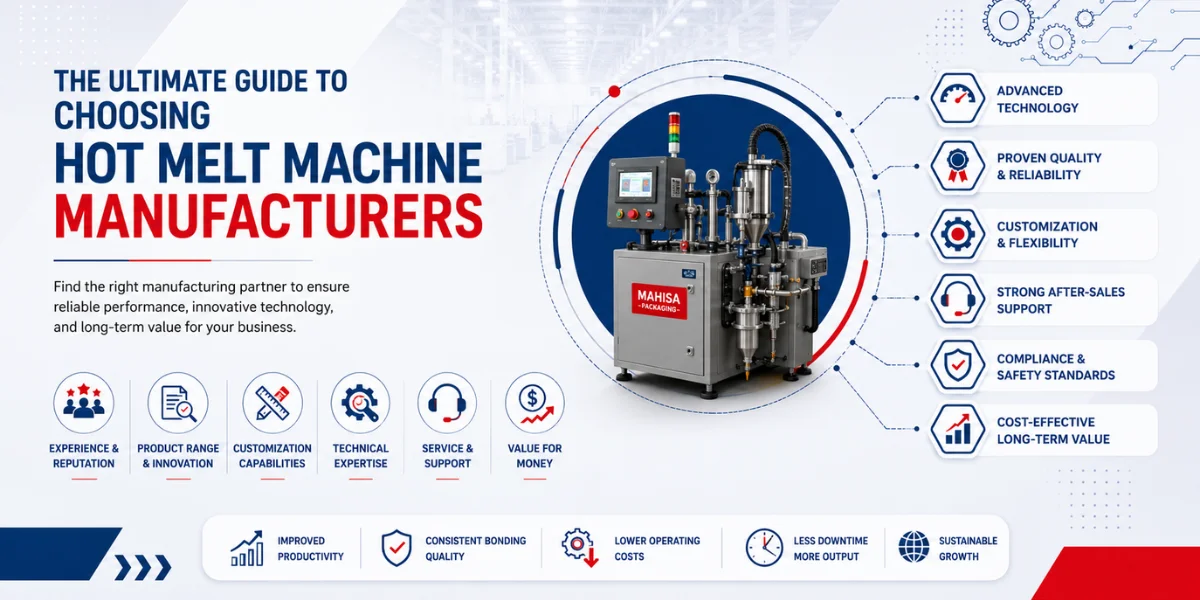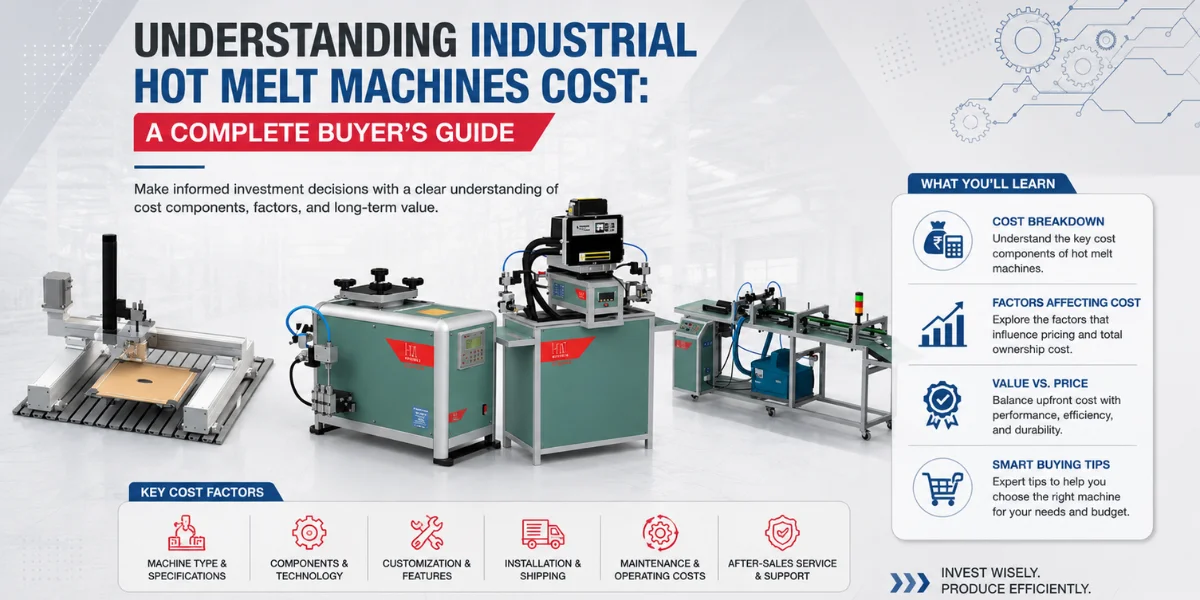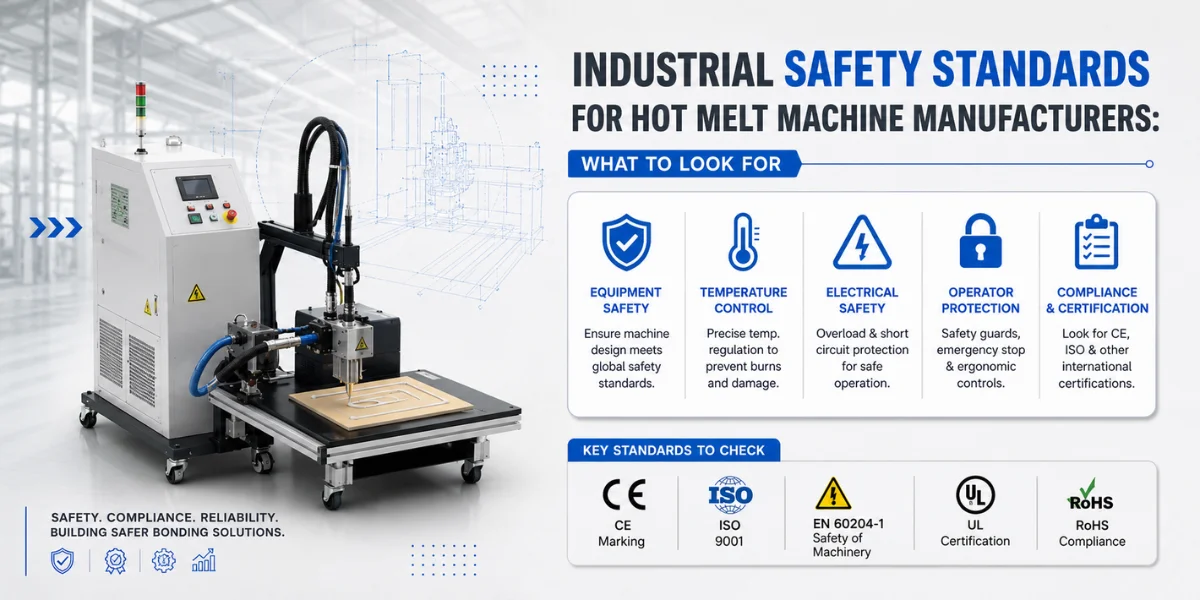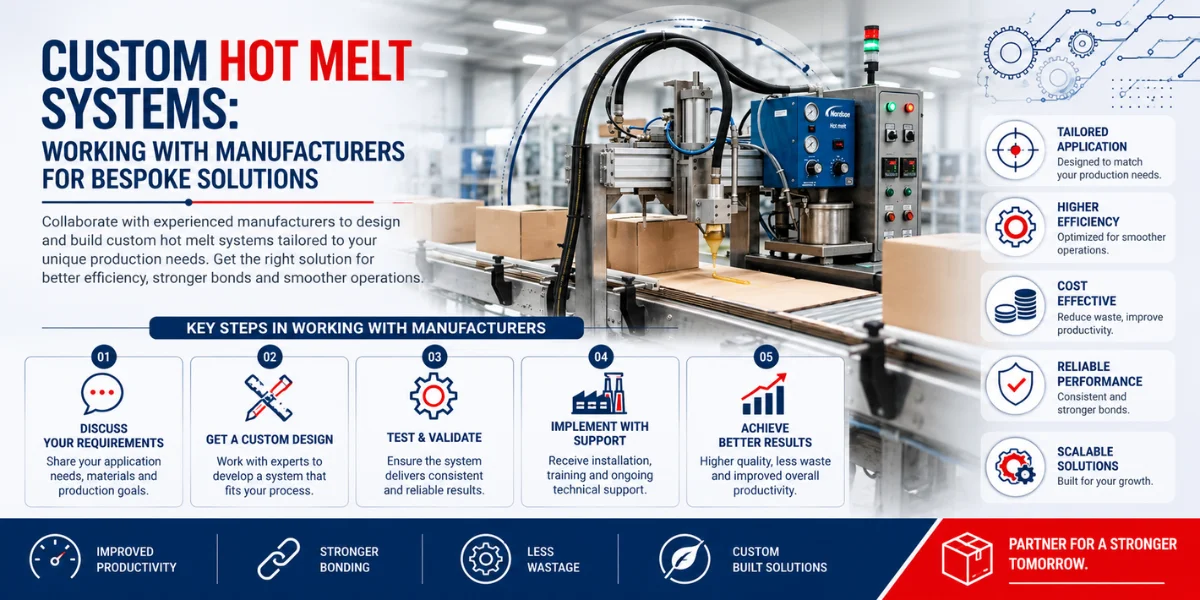
Custom hot melt systems are designed to meet the specific adhesive application, production speed, material, and packaging requirements of a manufacturing line. Unlike standard hot melt equipment, bespoke systems can be configured around factors such as adhesive type, dispensing pattern, operating temperature, substrate, production volume, and available line space.
For industries with specialized production requirements, working directly with an experienced hot melt system manufacturer can help create a solution that improves application accuracy, production efficiency, and process consistency.
What Is a Custom Hot Melt System?
A custom hot melt system is an adhesive application solution engineered or configured for a particular production process. It typically combines components such as a hot melt adhesive tank or melter, heated hoses, application guns or nozzles, temperature controls, pumps, and automation interfaces.
The system can be modified according to the customer’s application requirements rather than forcing the production line to adapt to a standard machine.
Specific glue patterns or bead sizes
High-speed adhesive dispensing
Precise temperature control
Integration with an existing packaging machine
Special nozzle configurations
Automated adhesive application
Compact equipment for limited production space
A custom system allows these requirements to be considered during the equipment design and configuration process.
FAQs: What Is a Custom Hot Melt System?
What is a custom hot melt system?
A custom hot melt system is an adhesive application system designed or configured according to specific production requirements, including adhesive type, application pattern, production speed, substrate, and machine setup.
How is a custom hot melt system different from a standard system?
A standard hot melt system generally uses predefined specifications, while a custom hot melt system can be tailored to a manufacturer’s specific adhesive application, production line, automation, and space requirements.
What industries use custom hot melt systems?
Custom hot melt systems are used across packaging, woodworking, automotive, furniture, textiles, nonwoven products, bookbinding, electronics, and other manufacturing industries requiring controlled adhesive application.
What can be customized in a hot melt system?
Depending on the application, manufacturers can customize components such as the adhesive tank capacity, pump, heated hoses, dispensing guns, nozzles, temperature controls, glue patterns, number of application points, and automation interfaces.
Why should manufacturers choose a custom hot melt system?
Manufacturers can choose a custom hot melt system when standard equipment does not fully meet their production requirements. A customized solution can improve adhesive application accuracy, production efficiency, process consistency, and integration with existing machinery.

Why Choose a Bespoke Hot Melt Solution?
Every manufacturing line has different operating conditions. A standard hot melt machine may work effectively for common applications, but specialized production processes may require additional customization.
1. Better Application Accuracy
Custom systems can be configured to deliver adhesive at specific locations, quantities, and patterns. This can help reduce excess glue and improve bonding consistency.
2. Improved Production Efficiency
A system designed around the production line can reduce unnecessary manual intervention and support faster adhesive application.
3. Easier Integration
Custom hot melt equipment can be designed to communicate with existing machinery, sensors, conveyors, PLCs, and production controls.
4. Reduced Adhesive Waste
Accurate dispensing helps control adhesive consumption. Applying only the required amount of hot melt adhesive can improve material efficiency and reduce operating costs.
5. Greater Process Consistency
Automated temperature and dispensing controls can provide more consistent adhesive application compared with manual processes.
6. Flexibility for Specialized Applications
Custom systems can accommodate unusual substrates, application patterns, production speeds, adhesive formulations, and machine configurations.
How Custom Hot Melt Systems Work
Although the configuration varies from one application to another, most hot melt systems follow a similar basic process.
Step 1: Adhesive Loading
Solid hot melt adhesive is loaded into the system’s heated tank or melter.
Step 2: Melting
Controlled heat converts the adhesive into a molten state. The temperature is maintained according to the adhesive manufacturer’s recommended operating range.
Step 3: Pumping
A pump moves the molten adhesive through heated hoses toward the application equipment.
Step 4: Application
The adhesive is dispensed through guns, nozzles, rollers, or other application heads according to the required pattern.
Step 5: Bonding
The adhesive is applied to the substrate, and the materials are joined before the hot melt cools and develops its bond.
In a customized system, each stage can be configured around the production line’s requirements.
Key Components of a Custom Hot Melt System
A manufacturer typically evaluates several components when developing a bespoke solution.
Hot Melt Tank or Melter
The melter determines how adhesive is heated, stored, and supplied to the application system. Tank capacity can be selected according to adhesive consumption and production requirements.
Temperature Control System
Precise temperature management is essential for maintaining the adhesive’s working characteristics. A custom system may include independent temperature zones for different components.
Pump
The pump supplies molten adhesive to the application points. Pump selection depends on factors such as adhesive viscosity, required flow rate, and application pressure.
Heated Hose
Heated hoses prevent the adhesive from cooling prematurely as it moves from the melter to the application head.
Application Gun or Nozzle
The application equipment determines how the adhesive reaches the substrate. Different nozzles and guns can produce different bead sizes, patterns, and application widths.
Control Panel
A control system allows operators to monitor and adjust parameters such as temperature, pressure, adhesive delivery, and application timing.
Automation Interface
For automated production environments, the hot melt system can be integrated with PLCs, sensors, conveyors, robotic systems, or packaging equipment.
What Should You Discuss With a Hot Melt System Manufacturer?
Successful customization starts with clearly communicating the production requirements to the manufacturer.
1. Application Type
Explain exactly where and how the adhesive will be applied.
For example:
- Carton sealing
- Case sealing
- Label application
- Product assembly
- Bookbinding
- Nonwoven bonding
- Furniture manufacturing
- Automotive components
- Hygiene products
- Electronics assembly
- Packaging applications
The application determines the appropriate equipment configuration.
2. Adhesive Type
The manufacturer needs to understand which hot melt adhesive is being used or planned.
Different adhesives can have different:
- Melting temperatures
- Viscosities
- Open times
- Setting characteristics
- Bonding requirements
Using equipment compatible with the adhesive is essential for reliable performance.
3. Production Speed
Production speed directly affects the required adhesive delivery rate and response time.
A high-speed packaging line may require faster dispensing and precise synchronization between the adhesive system and production machinery.
4. Substrate Materials
Tell the manufacturer what materials need to be bonded.
Examples include:
- Corrugated board
- Paper
- Cardboard
- Plastic
- Fabric
- Foam
- Wood
- Nonwoven materials
- Laminated substrates
The substrate influences adhesive selection and application requirements.
5. Glue Pattern
The required glue pattern should be clearly defined.
A production process may require:
- Continuous beads
- Intermittent beads
- Dots
- Spirals
- Lines
- Wide coating
- Multiple parallel beads
The manufacturer can then recommend suitable application heads and controls.
FAQs: What Should You Discuss With a Hot Melt System Manufacturer?
What production details should I share with a hot melt system manufacturer?
Share details such as production speed, adhesive consumption, substrate materials, application method, required glue pattern, number of dispensing points, operating temperature, and available installation space.
Should I discuss my adhesive type with the hot melt system manufacturer?
Yes. The adhesive type is an important consideration because different hot melt adhesives have different viscosity, melting temperatures, open times, and application requirements. This information helps the manufacturer recommend compatible equipment.
Can a hot melt system manufacturer customize the equipment for my existing production line?
Yes. Depending on the application, a hot melt system manufacturer can configure the system to integrate with existing machinery, conveyors, sensors, PLCs, and automated production equipment.
What glue application requirements should I explain to the manufacturer?
Explain whether you need continuous beads, intermittent lines, dots, spirals, multiple beads, or another application pattern. You should also specify the desired adhesive quantity and application speed.
Should I discuss future production requirements with the manufacturer?
Yes. Discuss expected production growth, additional application points, higher line speeds, and future automation plans. This can help the manufacturer design a hot melt system that can accommodate future requirements.
How Manufacturers Develop Bespoke Hot Melt Systems
A professional manufacturer generally follows a structured process when designing a customized solution.
Requirement Assessment
The first stage is understanding the customer’s application, production environment, adhesive, substrate, and performance expectations.
Technical Evaluation
The manufacturer evaluates factors such as adhesive viscosity, operating temperature, flow requirements, production speed, and application pattern.
System Design
Based on these parameters, the manufacturer develops a suitable equipment configuration.
Testing and Validation
Where required, adhesive application can be tested to verify bonding performance, dispensing accuracy, and production compatibility.
Installation and Integration
The system is installed and connected with the customer’s existing production equipment.
Operator Training
Training helps production teams understand system operation, temperature settings, maintenance requirements, and safety procedures.
Important Factors When Selecting a Custom Hot Melt Manufacturer
Choosing the right manufacturer is just as important as defining the machine specifications.
Manufacturing Experience
Look for a manufacturer with experience in designing hot melt adhesive systems for applications similar to yours.
Customization Capability
A manufacturer should be able to modify equipment based on production requirements rather than offering only fixed configurations.
Technical Support
Reliable technical support is important during installation, commissioning, troubleshooting, and maintenance.
Spare Parts Availability
Easy access to compatible spare parts can help minimize production downtime.
Automation Expertise
If the system needs to communicate with existing machinery, the manufacturer should understand industrial automation and machine integration.
Application Knowledge
A strong manufacturer should understand both the equipment and the adhesive application process.
Custom vs. Standard Hot Melt Systems
| Feature | Standard System | Custom Hot Melt System |
|---|---|---|
| Configuration | Predefined | Application-specific |
| Integration | Limited or standard | Designed around existing machinery |
| Application patterns | Common patterns | Specialized patterns possible |
| Production requirements | General-purpose | Specific production targets |
| Automation | Standard options | Customized integration |
| Space requirements | Fixed configuration | Can be optimized |
| Best suited for | Conventional applications | Specialized applications |
A standard system may be sufficient for straightforward applications. However, a custom system can be more appropriate when production requirements are unusual or when integration with existing machinery is critical.
Benefits of Working Directly With the Manufacturer
Collaborating directly with a manufacturer can simplify the customization process.
The manufacturer can evaluate the entire adhesive application method process instead of focusing only on individual machine components. This can help create a more coordinated system.
Application requirements
Equipment modifications
Automation requirements
Maintenance expectations
Future production expansion
For manufacturers planning long-term production upgrades, this relationship can be particularly valuable.
Common Mistakes to Avoid
Choosing Equipment Based Only on Price
The lowest initial price does not necessarily represent the lowest total cost. Equipment reliability, adhesive consumption, maintenance, downtime, and technical support should also be considered.
Ignoring Adhesive Compatibility
A hot melt system should be compatible with the adhesive’s operating requirements. Incorrect temperature or equipment selection can affect adhesive performance.
Not Sharing Complete Production Details
Manufacturers need accurate information about production speed, substrate, glue pattern, operating environment, and application requirements.
Underestimating Future Production Needs
If production volume is expected to increase, it may be worth discussing future capacity during the initial system design.
Focusing Only on the Main Machine
Hoses, guns, nozzles, pumps, controls, sensors, and integration components all contribute to system performance.
Questions to Ask Before Ordering a Custom Hot Melt System
Before finalizing a solution, manufacturers should consider questions such as:
- What adhesive will the system use?
- What materials need to be bonded?
- What production speed is required?
- How much adhesive is consumed per hour?
- What glue pattern is required?
- How many application points are needed?
- Does the system need to integrate with existing machinery?
- What level of automation is required?
- What space is available for installation?
- What maintenance and technical support will be required?
Answering these questions gives the manufacturer a clearer understanding of the application and helps avoid unnecessary modifications later.
Why Customization Matters for Indian Manufacturing
India’s packaging and manufacturing sectors include a wide range of production environments, from small and medium-sized operations to high-speed automated facilities. This means adhesive equipment requirements can vary significantly between businesses.
A customized hot melt solution can be developed around local production conditions, available floor space, machine configurations, workforce requirements, and production targets.
For Indian manufacturers, working with an experienced hot melt machine manufacturer in India can also simplify communication, installation, training, spare-parts access, and after-sales support.
How Mahisa Packaging Can Help With Custom Hot Melt Solutions
Mahisa Packaging focuses on hot melt adhesive equipment and packaging automation solutions designed around practical production requirements.
For businesses that need more than an off-the-shelf machine, discussing the application directly with a manufacturer can help identify the appropriate combination of melting capacity, adhesive delivery, application heads, controls, and automation.
The right solution should not simply dispense adhesive, it should work as part of the overall production process.
Conclusion
Custom hot melt systems provide manufacturers with a way to adapt adhesive application technology to specific production requirements. By considering the adhesive, substrate, production speed, glue pattern, machine layout, automation requirements, and future capacity, manufacturers can develop a system that fits their operation more effectively.
The most important step is choosing an experienced hot melt system manufacturer capable of understanding the complete application rather than supplying equipment based only on standard specifications.
For specialized packaging and manufacturing applications, working closely with the manufacturer from requirement assessment through installation and support can make customization more effective and help achieve reliable adhesive application performance.
FAQs
What is a custom hot melt system?
A custom hot melt system is an adhesive dispensing solution configured or engineered according to a specific production line’s adhesive, substrate, speed, application pattern, and automation requirements.
When should a manufacturer choose a custom hot melt system?
A custom system is useful when standard equipment cannot meet requirements for application pattern, production speed, machine integration, available space, adhesive delivery, or automation.
Can a custom hot melt system be integrated with existing machinery?
Yes. Depending on the equipment and application, custom systems can be designed to work with existing packaging machines, conveyors, sensors, PLCs, and automated production lines.
What information does a manufacturer need to design a bespoke hot melt system?
Important information includes adhesive type, substrate material, production speed, adhesive consumption, application pattern, number of application points, operating temperature, machine layout, and automation requirements.
Are custom hot melt systems suitable for packaging applications?
Yes. They can be configured for applications such as carton sealing, case sealing, packaging assembly, labeling, and other adhesive-based manufacturing processes.
How do I choose the right custom hot melt system manufacturer?
Evaluate the manufacturer’s customization capability, application experience, technical support, automation expertise, spare-parts availability, testing capability, and experience with similar production applications.