Rubber to Plastic Adhesive

Finding the right rubber to plastic adhesive is essential when you need a strong, flexible, and durable bond between two completely different materials. Whether you’re repairing appliances or working on industrial plastic bonding, choosing the correct formulation determines long-term success. The adhesive bonding process involves selecting high-performance glues that can withstand stretching, heat, and tough environments. Options like hot melt adhesives for plastic, flexible epoxies, and toughened CA formulations ensure reliability. With the right adhesive for bonding, proper surface prep, and correct adhesive application methods, you can achieve a secure bond using the best adhesive for rubber to plastic.

Rubber Bonding Glue

Choosing the right rubber bonding glue is critical when joining elastic rubber to rigid plastics. Since both materials behave differently, you need advanced adhesive for rubber and plastic designed to flex without cracking. Industrial formulas, including hot melt adhesives, plastic-friendly epoxies, and toughened CA glues, deliver reliable results in demanding conditions. These adhesives work seamlessly across DIY projects and manufacturing applications by enhancing the overall adhesive bonding process. Whether you’re repairing a seal or creating a permanent fixture, the key lies in choosing a rubber to plastic adhesive engineered for durability and precision during application.

Adhesive for Silicone Rubber to Plastic

When working with silicone, you must choose an adhesive for silicone rubber to plastic, as standard glues simply won’t bond. Silicone surfaces resist most adhesives, making specialized RTV silicone compounds essential. These adhesives fit perfectly into the adhesive bonding process, offering strong chemical adhesion to nonporous plastics and flexible rubber surfaces. Combining these solutions with proper surface prep and compatible adhesive application methods helps ensure success. Whether you’re looking to stick rubber to plastic or reinforce delicate components, silicone-compatible rubber bonding glue and high-strength epoxies support lasting bonds where traditional adhesives fail.

Stick Rubber to Plastic

Learning how to stick rubber to plastic successfully starts with choosing the best adhesive for rubber to plastic and following proper preparation techniques. The right rubber to plastic adhesive must be flexible, durable, and strong enough to withstand stress and movement. Whether using toughened CA glue, PUR hot melt adhesives for plastic, or flexible epoxies, the success of the bond relies on correct surface sanding, cleaning, and priming. By incorporating advanced adhesive application methods, you can enhance the performance of the adhesive for bonding rubber to plastic, ensuring a long-lasting and reliable connection between both materials.
Adhesive for Bonding Rubber to Plastic
Finding the right adhesive for bonding rubber to plastic requires understanding material behaviour and selecting a glue that bridges chemical differences. Industrial-grade rubber to plastic adhesive products such as toughened cyanoacrylates, flexible epoxies, and PUR hot melt adhesives are ideal for high-performance plastic bonding. These adhesives offer strong mechanical grip and excellent flexibility, making them suitable for various repairs and industrial uses. Proper adhesive application methods, along with correct surface preparation, are essential for maximizing adhesion strength. By choosing the adhesive for rubber and plastic engineered for durability, you ensure a bond that withstands pressure, heat, and long-term use.
rubber to plastic adhesive, plastic bonding, hot melt adhesives for plastic, adhesive bonding process, adhesive for bonding, hot melt adhesives, adhesive application methods, rubber bonding glue, adhesive for silicone rubber to plastic, stick rubber to plastic, best adhesive for rubber to plastic, adhesive for bonding rubber to plastic, adhesive for rubber and plastic

The Ultimate Guide to Rubber to Plastic Adhesive: Bonding the Unbendable

The Ultimate Guide to Rubber to Plastic Adhesive: Bonding the Unbendable
If you are a DIY enthusiast, a mechanic, or simply a homeowner trying to fix a broken appliance, you have likely encountered the “mixed material” nightmare. You have a flexible component, you have a rigid component, and you need to make them stay attached. Learning how to effectively stick rubber to plastic is one of the most frustrating challenges in the world of repair.
While gluing wood to wood is elementary, finding the right rubber to plastic adhesive is notoriously difficult. Why? Because these two materials behave very differently. Rubber is flexible, porous, and stretches. Plastic is often rigid, smooth, and chemically resistant. If you use the wrong product, the bond will snap the moment the rubber flexes or the plastic expands.
In this guide, we will break down the science of plastic bonding, review the best products on the market, and detail the full adhesive bonding process to ensure your repair holds tight.

The Challenge: Why Is It So Hard?

rubber to plastic adhesive, plastic bonding, hot melt adhesives for plastic, adhesive bonding process, adhesive for bonding, hot melt adhesives, adhesive application methods, rubber bonding glue, adhesive for silicone rubber to plastic, stick rubber to plastic, best adhesive for rubber to plastic, adhesive for bonding rubber to plastic, adhesive for rubber and plastic
To understand why your previous attempts might have failed, you need to understand the physics of adhesion.
Many plastics, particularly Polyethylene (PE) and Polypropylene (PP), have “low surface energy.” Imagine a non-stick frying pan; water beads up on it rather than spreading out. Low-energy plastics act the same way with glue the adhesive creates a bead on top rather than gripping the surface.
Rubber poses a different challenge: elasticity. As rubber stretches and compresses, it puts immense stress on the glue line. If the adhesive for bonding dries into a brittle, hard crystal (like standard super glue often does), the movement of the rubber will shatter the bond instantly.
Therefore, the best adhesive for rubber to plastic must be:
1. Chemically aggressive enough to bite into the smooth plastic.
2. Flexible enough to move and stretch with the rubber.

Top Contenders: Choosing Your Adhesive

Not all glues are created equal. Depending on your specific project, whether it’s fixing a shoe, a car seal, or a child’s toy, you will need a specific formulation. Here is a breakdown of the primary categories of rubber bonding glue.

1. Cyanoacrylate (CA) "Toughened" Instant Glue

Standard super glue is brittle. However, “Rubber-Toughened” Cyanoacrylate is the gold standard for small, precise bonds. These adhesives contain rubber particles within the formula that prevent the cured glue from becoming too brittle.
Best for:
O-rings, weather stripping, and small rubber feet on electronics.
Pros:
Cures instantly, high tensile strength.
Cons:
Not great for large surface areas; can “bloom” (leave a white haze) on clear plastic.

2. Two-Part Epoxies (Plastic Formulations)

Epoxy consists of a resin and a hardener. When mixed, they create a thermosetting plastic that is incredibly strong. When looking for an adhesive for bonding rubber to plastic, you must look for an epoxy labelled “flexible” or specifically formulated for plastics. Standard epoxy creates a rigid bond that may crack under the movement of rubber.
Best for:
Structural bonds, rigid plastics, and gap filling.
Pros:
Extremely durable, waterproof, and chemical resistant.
Cons:
Long cure time, requires mixing.

3. Contact Cement

If you are bonding a large sheet of rubber to a plastic surface, like a rubber grip onto a plastic handle, contact cement is excellent. This is a vital adhesive for rubber and plastic laminations. You apply it to both surfaces, let it dry until tacky, and then press them together.
Best for:
Large surface areas, laminating, and shoe repair.
Pros:
Remains permanently flexible, immediate grab.
Cons:
Unforgiving (you only get one shot to line it up).

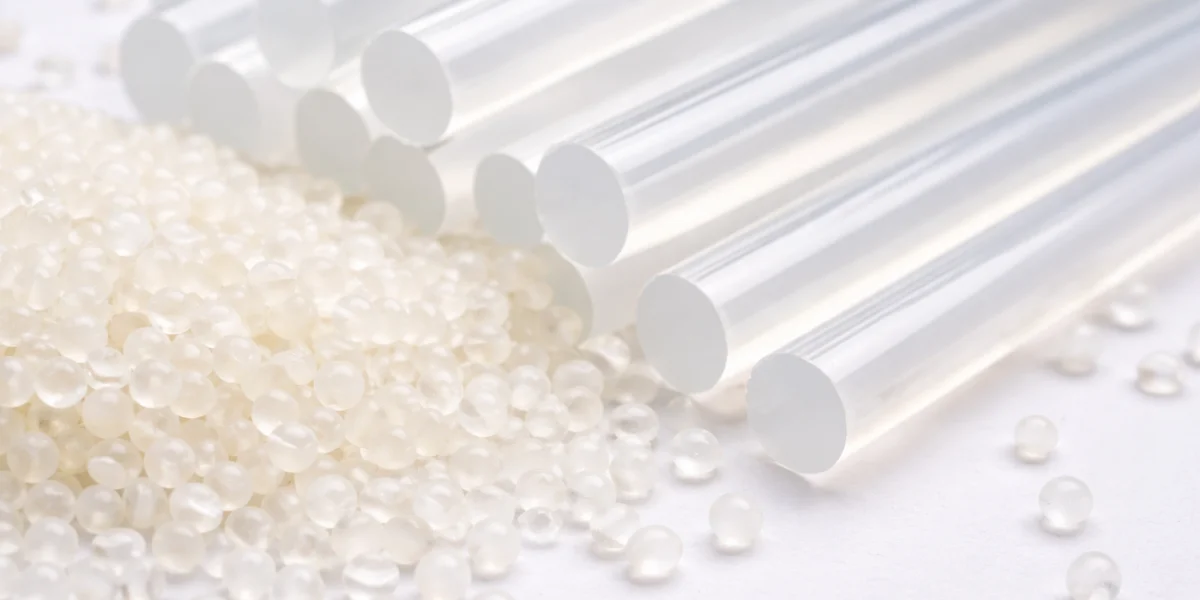
4. Hot Melt Adhesives

There is a common misconception here. We aren’t talking about the cheap craft glue guns used for scrapbooking. In an industrial context, hot melt adhesives are incredibly effective. Specifically, Polyurethane (PUR) hot melts.
Hot melt adhesives for plastic bonding in manufacturing are popular because they set quickly and can handle the thermal expansion differences between rubber and plastic. However, for the average DIYer, unless you have access to high temperature PUR systems, a standard glue gun provides a weak bond that will likely fail in hot weather.

5. Silicone-Based Adhesives

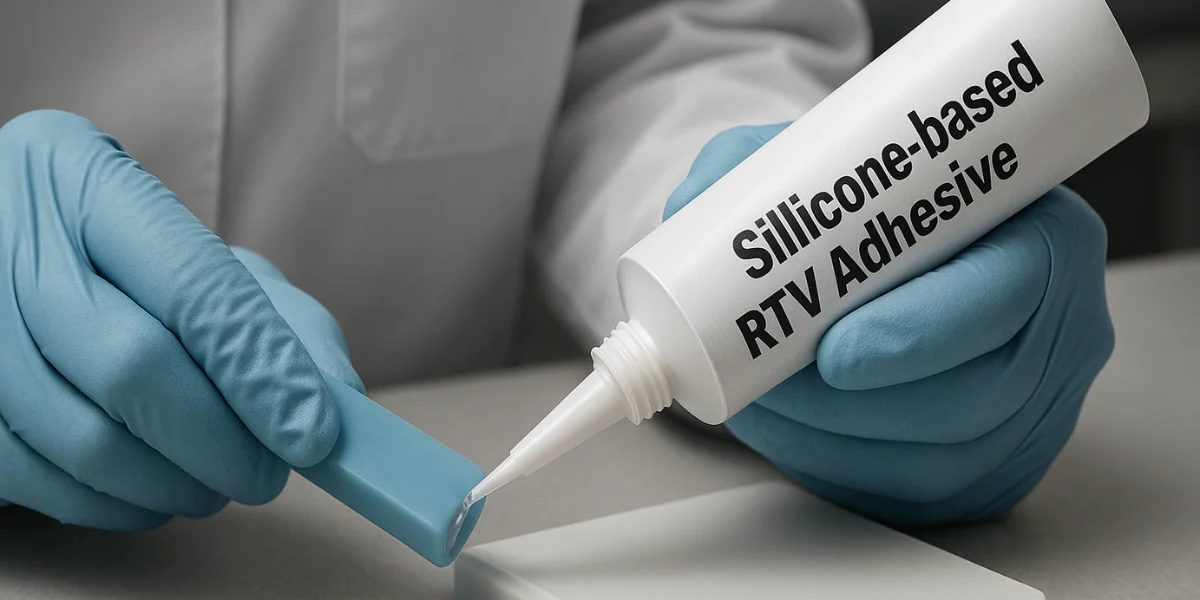
If you are dealing with silicone rubber, you are in a unique category. Silicone repels almost everything. If you need an adhesive for silicone rubber to plastic, you generally must use a silicone-based RTV (Room Temperature Vulcanizing) adhesive. Nothing else will stick to the silicone.

The Adhesive Bonding Process: A Step-by-Step Guide

90% of adhesive failures are due to poor surface preparation, not the glue itself. Regardless of the adhesive application methods you choose, follow this protocol to ensure a bond that lasts.

Step 1: Identify Your Plastic

This is crucial. Look for a recycling symbol on the plastic.
ABS, PVC, PC, Acrylic:
These are “easy” plastics. Most standard adhesives will work.
PE (Polyethylene) or PP (Polypropylene):
These are “hard” plastics. You must use a system that includes a “Surface Primer” or “Activator.” Without a primer, even the strongest adhesive for bonding will pop right off.

Step 2: Surface Preparation (Abrasion)

Adhesives love texture. They need nooks and crannies to grab onto. This is a critical part of plastic bonding.

Use 120-grit sandpaper to roughen both the plastic and the rubber.

Caution:
Don’t sand so hard that you distort the shape of the part. You just want to take the shine off the plastic and remove the “skin” from the rubber.

Step 3: Clean and Degrease

Sanding creates dust, and rubber often comes from the factory with a “mold release agent” (a greasy coating).

Wipe both surfaces thoroughly.

Do not use mineral spirits, as these leave an oily residue.
Best Cleaner:
Isopropyl Alcohol (90% or higher). It cleans effectively and evaporates quickly.

Step 4: Priming (If Necessary)

If you are working with those difficult plastics (PE/PP), apply the primer pen or liquid included with your adhesive kit to the plastic surface only. Let it flash dry (usually 30-60 seconds). This chemically modifies the surface energy, making it receptive to the rubber to plastic adhesive.

Step 5: Application

Different glues require different adhesive application methods:
For CA Glue:
Apply a small drop to one surface only. Press together immediately.
For Epoxy:
Mix thoroughly, then apply a thin layer to both sides.
For Contact Cement:
Apply to both sides. Wait 10-15 minutes until it feels dry to the touch but tacky. Then press together.

Step 6: Clamp and Cure

Clamping:
Use spring clamps, tape, or heavy weights. Even instant glues benefit from 5 minutes of immobility.
Curing:
“Dry” does not mean “Cured.” Most adhesives reach 50% strength in an hour but require 24 hours to reach full strength. Do not stress the part until the next day.

Common Mistakes to Avoid

When searching for the best adhesive for rubber to plastic, avoid falling into these common traps:
Using Standard Hot Glue:
As mentioned, unless you are using industrial hot melt adhesives, standard craft hot glue is a thermoplastic that creates a weak mechanical bond. In hot weather, it will peel off the smooth plastic immediately.
Using “All-Purpose” Super Glue:
Standard super glue forms a brittle crystal structure. One bend of the rubber, and the glue line shatters like glass. You need “toughened” CA glue.
Skipping the Sanding:
If the plastic is shiny, the rubber bonding glue has nowhere to grip. This is the number one cause of failure.
Ignoring Temperature:
If the repair will be used in a car engine bay or outdoors in winter, ensure your adhesive is rated for those temperature extremes. Cyanoacrylates generally handle cold well, while Epoxies handle heat better.

Safety First

Working with chemical adhesives requires care:
Ventilation:
Contact cements and some epoxies emit volatile organic compounds (VOCs). Always work in a well-ventilated area.
Skin Protection:
Cyanoacrylate bonds skin instantly. Wear nitrile gloves.
Eye Protection:
Always wear safety glasses. Splashing activator or hardener into your eyes is a medical emergency.

Conclusion

Bonding rubber to plastic doesn’t have to be a guessing game. The secret lies in respecting the chemistry of the materials and following the correct adhesive bonding process.
Remember the golden rules: Check your plastic type (is it PE/PP?), choose a flexible adhesive for rubber and plastic (like toughened CA or Contact Cement), and never skip the surface preparation. By roughening and cleaning your materials properly, you give the adhesive the mechanical advantage it needs.
Don’t let a broken part force you to buy a replacement. Grab the right rubber to plastic adhesive, follow these steps, and fix it for good.

FAQ's

How do I glue a rubber sole to a plastic shoe heel?

Use a high-grade Contact Cement (like Barge cement). Sand both the rubber and the plastic heel heavily. Apply cement to both, wait 15 minutes, heat the glue slightly with a hairdryer to reactivate the tackiness, and hammer them together. This is the classic shoemaker's adhesive application method.

Can I glue Silicone Rubber?

As noted, this is difficult. You specifically need an adhesive for silicone rubber to plastic. Look for primers specifically designed for silicone, or use a silicone adhesive. Standard epoxies will fail.

What is the best glue for automotive weather stripping?

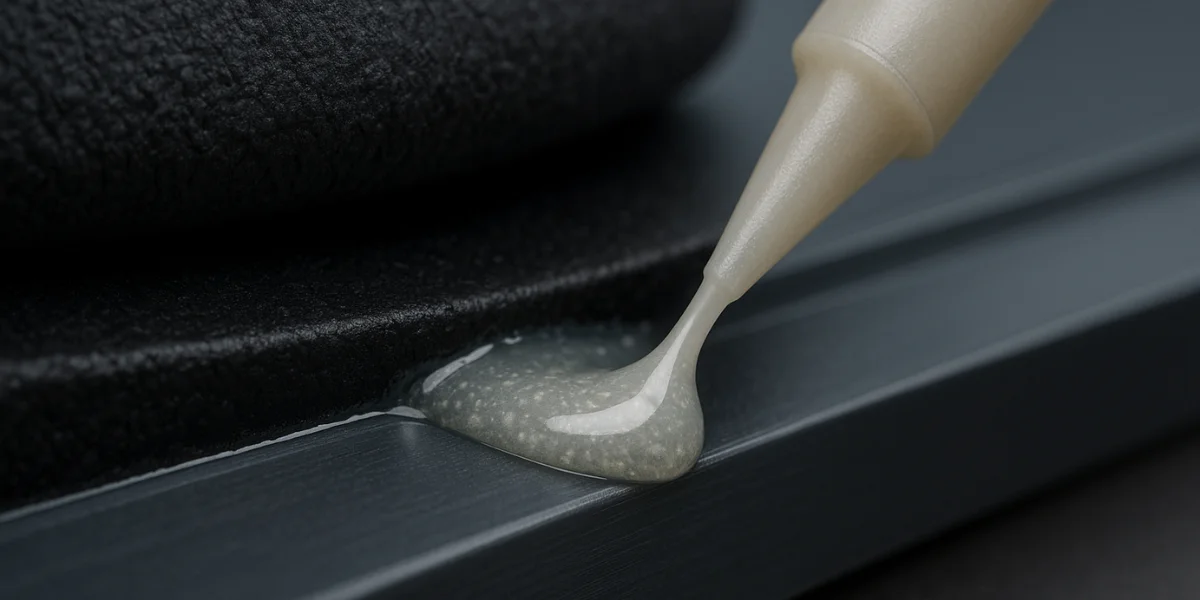
Automotive weather strip adhesive (often called "Gorilla Snot" by mechanics due to its yellow colour) is a specialized contact cement designed to bond rubber gaskets to painted metal or plastic trim.

What adhesive for rubber to plastic?

Use rubber-toughened cyanoacrylate (super glue) for small parts or plastic-formulated epoxy for structural bonds. Contact cement works best for large, flexible sheets requiring permanent elasticity.

Which glue is best for rubber?

Toughened super glue is ideal for small repairs as it resists cracking. For larger areas or shoe soles, use contact cement for superior flexibility and strong adhesion.

How to stick rubber to plastic?

Clean and sand both surfaces to create texture. Apply a flexible adhesive like toughened super glue or contact cement, press materials together firmly, and clamp until fully cured.

Can you glue rubber to plastic?

Yes, but standard glues often fail due to flexibility issues. You must use a specialized adhesive like toughened super glue or epoxy, and properly sand the surfaces first.

Which adhesive works best on rubber?

For natural rubber, contact cement or toughened super glue works best. However, for silicone rubber, you must use a specialized silicone-based adhesive, as nothing else will bond.